
From traditional salient pole motors to advanced permanent magnet and reluctance designs, each type offers unique advantages tailored to specific needs.
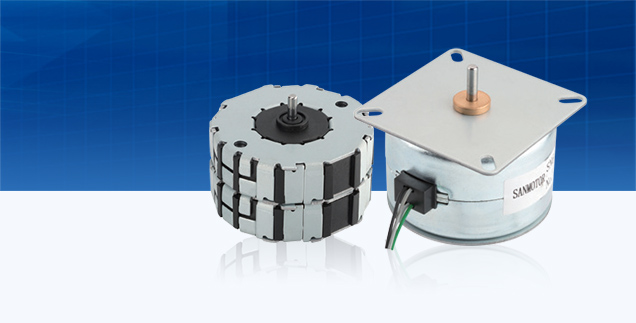
What Is a Synchronous Motor?
A synchronous motor runs at a constant speed determined by the AC supply frequency, maintaining synchronization regardless of load within its operating limits.
Unlike induction motors, which experience slip (a difference between rotor speed and magnetic field speed), synchronous motors maintain zero slip. Synchronous motors are often used for:
- Industrial drives requiring constant speed
- Power factor correction systems
- Precision equipment
- Pumps, compressors, and conveyors
Basic Working Principle
The rotor, which is magnetized either electrically or permanently, locks into this rotating field and begins to rotate at the same speed.
However, synchronous motors are not self-starting. They require additional mechanisms such as auxiliary motors, damper windings, or electronic drives to bring them up to synchronous speed.
Main Components of a Synchronous Motor
Before diving into the types, it is important to understand the basic structure.
Stator
The stator, which remains stationary, generates a rotating magnetic field when supplied with alternating current power.
Rotor
The rotor is the rotating part that locks into the stator’s magnetic field. Its design determines the type of synchronous motor.
Excitation System
This system provides the magnetic field for the rotor, either through direct current or permanent magnets.
Shaft and Bearings
These mechanical components transfer rotational energy to the load.
Classification of Synchronous Motors
Synchronous motors can be classified based on rotor construction, excitation method, and application. The most common classification is based on rotor design.
Types of Synchronous Motors
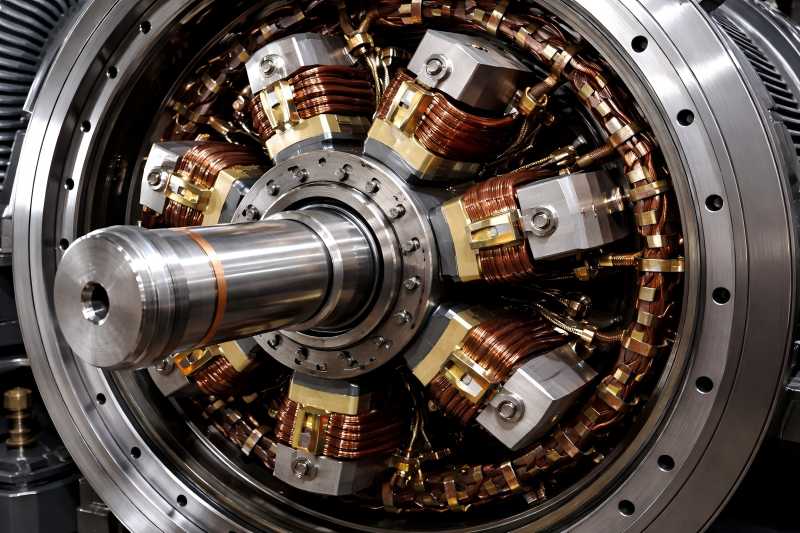
Salient Pole Synchronous Motor
Salient pole motors have projecting poles mounted on the rotor. These poles are clearly visible and usually have field windings wrapped around them.
This type is typically used in low-speed applications because the rotor diameter is large and the axial length is short. The design allows for better cooling and easier maintenance.
Common applications include hydroelectric generators, low-speed compressors, and heavy industrial drives.
Key Characteristics:
- Large diameter rotor
- Low to medium speed
- High torque capability
- Suitable for vertical shaft applications
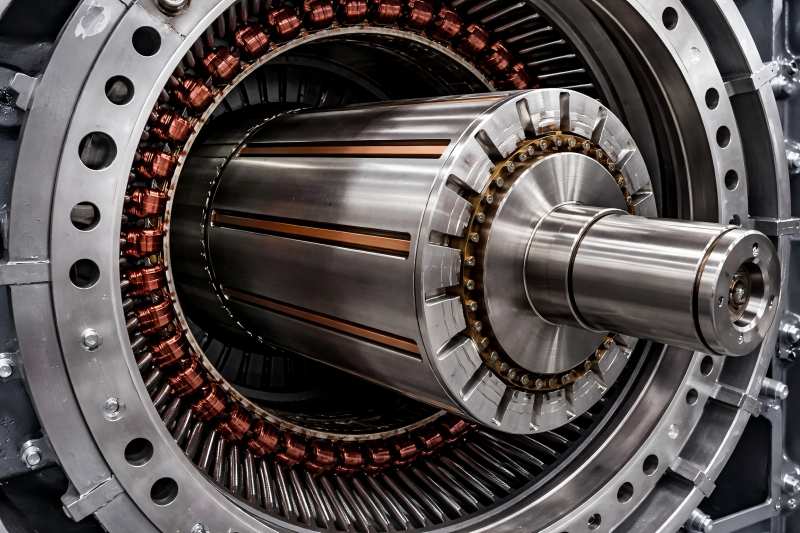
Non-Salient Pole (Cylindrical Rotor) Motor
Also known as round rotor motors, these have a smooth cylindrical rotor without projecting poles.
They are designed for high-speed operation and are commonly used in turbo-generators and high-speed industrial equipment.
The uniform air gap in this design ensures smooth operation and reduced mechanical stress.
Key Characteristics:
- High-speed capability
- Uniform structure
- Lower wind resistance
- Common in thermal power plants
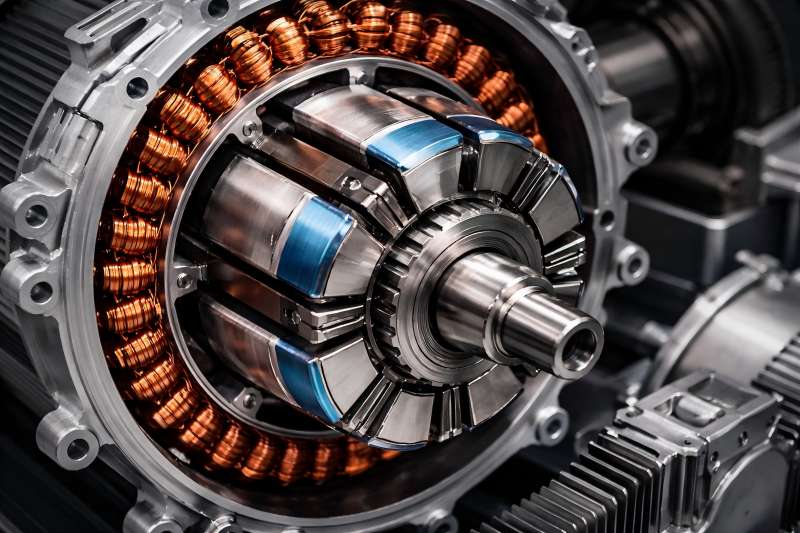
Permanent Magnet Synchronous Motor (PMSM)
Permanent magnet synchronous motors incorporate high-strength magnets within the rotor rather than relying on wound field coils.
This design removes the requirement for external excitation, resulting in higher efficiency and reduced energy loss.
As a result, PMSMs are extensively applied in areas such as electric vehicles, automation systems, and HVAC equipment.
Key Characteristics:
- High efficiency
- Compact design
- Low maintenance
- High power density
Brushless DC Motor (BLDC)
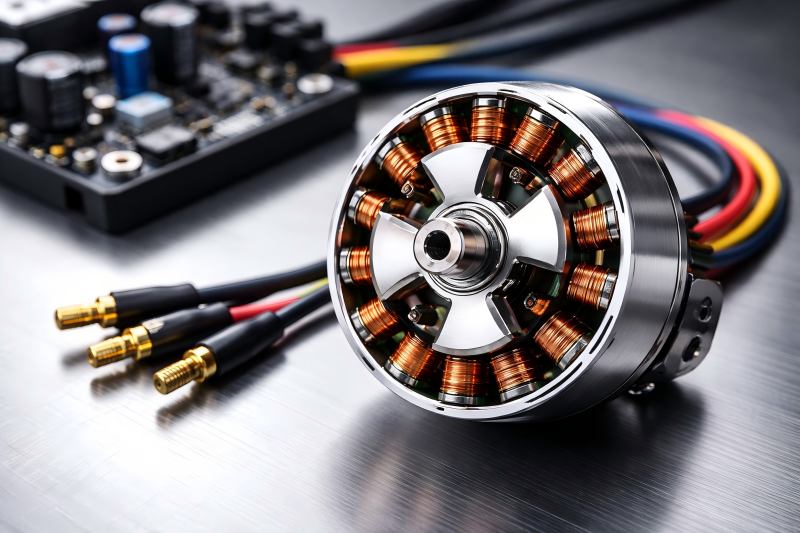
Although technically different in control method, BLDC motors are often considered a type of synchronous motor because their operation is synchronized with electronic commutation.
They rely on permanent magnets and electronic control systems rather than brushes, which extends service life and minimizes maintenance needs.
Key Characteristics:
- Electronic commutation
- High efficiency
- Quiet operation
- Widely used in consumer electronics
Reluctance Synchronous Motor
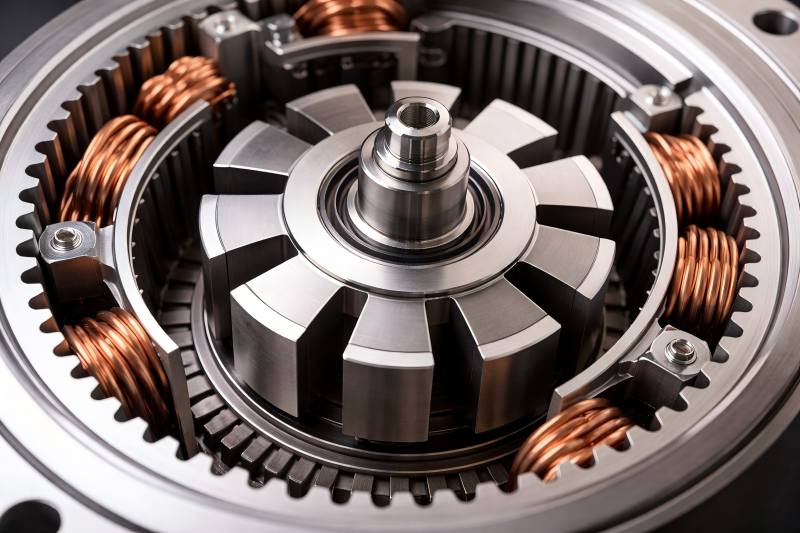
Reluctance motors work by exploiting differences in magnetic resistance, causing the rotor to naturally move into positions where the magnetic path offers the least opposition.
These motors do not require magnets or windings on the rotor, making them simple and robust.
Key Characteristics:
- Simple rotor design
- No magnets required
- Cost-effective
- Moderate efficiency
Hysteresis Synchronous Motor
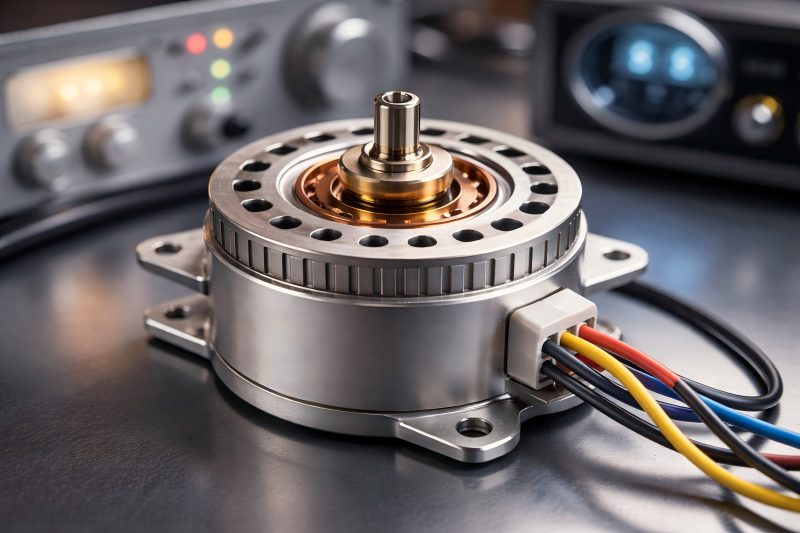
Hysteresis motors rely on the magnetic hysteresis property of the rotor material.
They deliver stable, low-noise performance, making them well suited for precision devices such as clocks, timers, and audio equipment.
Key Characteristics:
- Very smooth operation
- Quiet performance
- Self-starting capability
- Low torque output
Synchronous Reluctance Motor (SynRM)
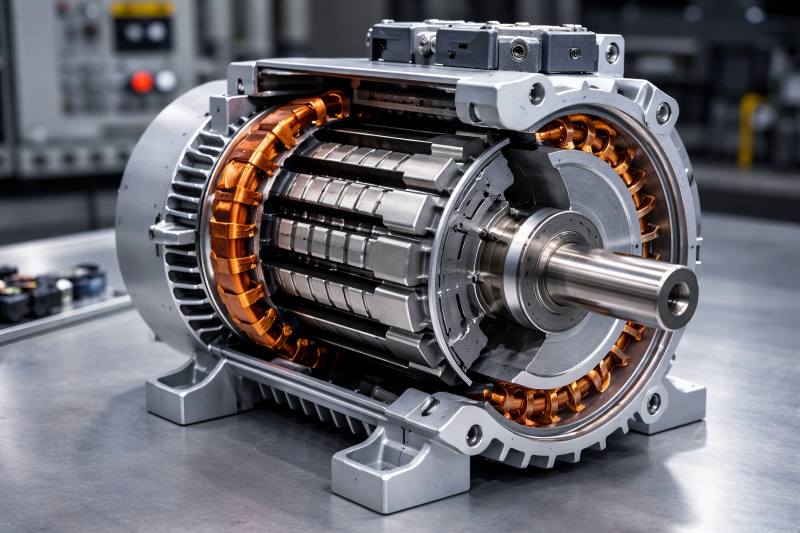
This design enhances conventional reluctance motors with increased efficiency and optimized performance.
They are gaining popularity as an alternative to induction motors due to their energy efficiency and reduced reliance on rare-earth materials.
Key Characteristics:
- Improved efficiency
- No permanent magnets
- Lower cost compared to PMSM
- Suitable for industrial drives
Comparison of Different Types
| Motor Type | Efficiency | Cost | Maintenance | Speed Range | Typical Applications |
| Salient Pole | Moderate | Medium | Medium | Low | Hydropower, compressors |
| Cylindrical Rotor | High | High | Medium | High | Power plants, turbines |
| PMSM | Very High | High | Low | Wide | EVs, robotics |
| BLDC | High | Medium | Low | Wide | Electronics, fans |
| Reluctance Motor | Moderate | Low | Low | Moderate | Pumps, industrial drives |
| Hysteresis Motor | Low | Medium | Low | Low | Clocks, audio equipment |
| Synchronous Reluctance (SynRM) | High | Medium | Low | Wide | Industrial automation |
Advantages of Synchronous Motors
Synchronous motors provide constant speed regardless of load variations, which is essential in precision systems. Their ability to operate at high efficiency reduces energy consumption and operating costs.
Another important advantage is power factor correction. It is an enhanced reluctance motor offering improved efficiency and overall performance.
Disadvantages of Synchronous Motors
Despite their advantages, synchronous motors also have some limitations.
They cannot start independently and need auxiliary starting methods, with higher upfront costs than induction motors, particularly PMSMs.
Additionally, the control systems for some synchronous motors can be complex, particularly those using electronic drives.
Applications of Synchronous Motors
Industrial Manufacturing
In industrial environments, synchronous motors are commonly used in processes that require stable speed and continuous operation. Their ability to maintain constant speed regardless of load fluctuations makes them ideal for precision-driven systems.
Typical applications include:
- Conveyors and material handling systems
- Pumps and compressors
- Rolling mills and crushers
- Mixers and agitators
Why they are used:
- Ensure consistent production quality
- Reduce energy losses in long-duration operations
- Improve overall system efficiency
Power Generation and Utilities
Synchronous motors play a dual role in power systems—not only as motors but also as tools for power factor correction and grid stability.
Key applications:
- Driving large generators in power plants
- Acting as synchronous condensers for power factor correction
- Stabilizing voltage in transmission networks
Advantages in this field:
- Ability to operate at leading, lagging, or unity power factor
- Enhance grid reliability and reduce transmission losses
- Support large-scale electrical infrastructure
Electric Vehicles (EVs) and Transportation
Modern transportation systems increasingly rely on high-efficiency motors, particularly permanent magnet synchronous motors (PMSM).
Applications include:
- Electric cars and buses
- High-speed trains and metro systems
- Electric scooters and bikes
Key benefits:
- High torque at low speeds
- Compact and lightweight design
- Excellent energy efficiency for battery-powered systems
Robotics and Automation
Automation systems demand precision, repeatability, and responsiveness—all of which synchronous motors can provide, especially when paired with advanced controllers.
Typical uses:
- Robotic arms and CNC machines
- Automated assembly lines
- Pick-and-place systems
Why preferred:
- Precise position and speed control
- Smooth and quiet operation
- High dynamic response
HVAC and Building Systems
In heating, ventilation, and air conditioning systems, synchronous motors are used to ensure efficient and stable airflow and temperature control.
Common applications:
- Air handling units
- Chillers and compressors
- Large ventilation fans
Advantages:
- Energy savings in long-running systems
- Reduced noise levels
- Reliable continuous operation
Consumer Electronics and Household Appliances
Smaller synchronous motors, especially BLDC and hysteresis types, are widely used in everyday devices.
Examples:
- Refrigerators and washing machines
- Air conditioners and fans
- Clocks and timers
Key reasons:
- Quiet operation
- Long service life
- Low maintenance requirements
Renewable Energy Systems
With the rapid growth of renewable energy, synchronous motors and generators are becoming increasingly essential in modern power generation systems.
Applications:
- Wind turbines (gearbox and generator systems)
- Solar tracking systems
- Hydropower generation
Benefits:
- High efficiency under variable conditions
- Compatibility with modern control systems
- Reliable performance in harsh environments
Aerospace and Defense
In high-performance environments such as aerospace, synchronous motors are valued for their precision and reliability.
Typical uses:
- Aircraft actuators
- Radar and communication systems
- Navigation equipment
Why they are critical:
- High reliability under extreme conditions
- Precise motion control
- Lightweight and efficient design
Key Selection Criteria
Selecting the appropriate synchronous motor requires considering multiple key factors.
Motor Selection Guide
| Criteria | Consideration |
| Load Type | Constant or variable load |
| Speed Requirement | Fixed or adjustable |
| Efficiency Needs | Energy-saving requirements |
| Budget | Initial and operational cost |
| Maintenance | Ease of servicing |
| Application | Industrial, commercial, or residential use |
Understanding these criteria helps ensure optimal performance and cost-effectiveness.
Future Trends
Synchronous motor technology is evolving rapidly, driven by advancements in materials and electronics.
Rising demand for energy efficiency is driving PMSM and SynRM adoption, while expanding electric vehicles and automation are accelerating advancements in motor design and control technologies.