
Permanent Magnet Synchronous Motors (PMSMs) deliver exceptional efficiency, compact size, and high torque density, making them ideal for electric vehicles, robotics, and industrial automation—performance depends on precise control strategy.
Both techniques aim to optimize torque production and efficiency while minimizing ripple and response time. Yet, their underlying principles, implementation complexity, and performance characteristics differ significantly.
Overview of PMSM Control
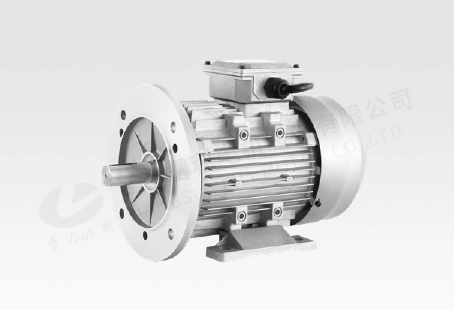
Basics of Permanent Magnet Synchronous Motors
PMSMs feature permanent magnets on the rotor that create the magnetic field, while the stator’s three-phase windings produce a rotating field that synchronously drives rotation.
Key equations governing PMSM dynamics include:
Te=2/3p(ψdiq−ψqid)
where:
- Te = Electromagnetic torque
- P= Number of pole pairs
- ψd = Flux linkages in the d- and q-axis
- id,iq= Current components along d- and q-axis
The control system’s main goal is to manage id and id precisely to achieve desired torque and flux levels.
Field-Oriented Control (FOC)
Principle of Operation
Field-Oriented Control, also known as Vector Control, transforms the three-phase stator currents into a rotating reference frame (d–q frame). This transformation decouples torque and flux, enabling independent, DC-motor-like control of PMSM currents.
The steps involved are:
- Measure stator currents ia,ib,ib, ic.
- Convert them into id and iq using Clarke and Park transformations.
- Control idi_did (flux) and iqi_qiq (torque) independently using PI regulators.
- Inverse transform back to three-phase voltages for PWM modulation.
This decoupling enables precise torque and speed control under dynamic load conditions.
FOC Control Structure
| Stage | Description | Function |
| Current Measurement | Captures phase currents ia,ibi_a, i_bia,ib | Inputs for transformations |
| Clarke Transformation | Converts 3-phase to 2-phase (α–β) | Simplifies calculations |
| Park Transformation | Converts α–β to d–q rotating frame | Separates torque and flux |
| PI Controllers | Controls idi_did and iqi_qiq | Maintains desired torque and flux |
| Inverse Park Transformation | Converts control outputs back to 3-phase signals | Feeds PWM inverter |
| PWM Generation | Modulates inverter switching | Applies voltage to PMSM |
Advantages of FOC
- Smooth Torque Output – Torque ripple is minimal due to sinusoidal current control.
- High Efficiency – Magnetic field alignment minimizes copper and iron losses.
- Wide Speed Range – Effective field weakening for high-speed operation.
- Stable Control – Proportional-integral (PI) regulators provide steady performance under variable load.
Limitations of FOC
- Complex Implementation – Requires multiple coordinate transformations and rotor position sensors.
- Parameter Sensitivity – Dependent on accurate motor parameters (resistance, inductance, flux linkage).
- Moderate Dynamic Response – Slightly slower torque response compared to DTC due to current regulation loops.

Direct Torque Control (DTC)
Principle of Operation
Direct Torque Control directly regulates the torque and stator flux of the PMSM without relying on current control loops or PWM modulation. Instead, it selects inverter voltage vectors based on real-time torque and flux feedback.
Core concept:
- Calculate instantaneous stator flux and torque.
- Compare with reference values using hysteresis controllers.
- Select the optimal voltage vector from a predefined table to correct deviations instantly.
DTC Control Structure
| Stage | Description | Function |
| Voltage and Current Sensing | Measures stator voltages/currents | Inputs for flux and torque estimation |
| Flux Estimation | Calculates stator flux vector | Determines magnetic field level |
| Torque Estimation | Computes electromagnetic torque | Monitors motor output |
| Hysteresis Controllers | Compare actual vs. reference torque/flux | Generate switching signals |
| Switching Table | Selects appropriate inverter vector | Controls torque and flux directly |
| Inverter | Applies selected voltage vector | Adjusts motor electromagnetic state |
Advantages of DTC
- Fast Torque Response – Excellent dynamic performance due to direct control.
- No Coordinate Transformations – Simplifies computation compared to FOC.
- No Need for PI Regulators or PWM – Reduces processing delay.
- Robustness – Less sensitive to motor parameter variations.
Limitations of DTC
- Higher Torque Ripple – Hysteresis-based control produces torque and flux oscillations.
- Variable Switching Frequency – Makes inverter design and filtering more complex.
- Lower Efficiency at Steady-State – Ripple losses may reduce system efficiency.
- Difficult Flux Control at Low Speed – Accuracy of flux estimation declines at low voltage.
Comparative Analysis: FOC vs DTC
| Aspect | Field-Oriented Control (FOC) | Direct Torque Control (DTC) |
| Basic Principle | Vector control with decoupled current control | Direct torque and flux control via hysteresis |
| Control Variables | id,iqi_d, i_qid,iq (current components) | Torque and stator flux |
| Dynamic Response | Moderate | Very fast |
| Torque Ripple | Low | High |
| Switching Frequency | Constant (via PWM) | Variable |
| Implementation Complexity | High (transformations + PI control) | Moderate (lookup tables + estimation) |
| Parameter Sensitivity | High | Low |
| Efficiency (steady-state) | High | Moderate |
| Low-Speed Performance | Excellent | Poor (flux estimation issue) |
| Hardware Requirement | Rotor position sensor, current sensors | Voltage and current sensors |
| Computational Load | High | Lower |
| Use Case Examples | Precision motion control, servo drives, robotics | Traction, EVs, applications needing fast torque response |
Dynamic Performance Comparison
To illustrate differences, the following example compares FOC and DTC control in a PMSM rated at 5 kW, 3000 rpm, under a step torque command:
| Performance Metric | FOC | DTC |
| Torque Rise Time | 2.8 ms | 1.1 ms |
| Torque Ripple | 2% | 8% |
| Speed Overshoot | 3% | 6% |
| Efficiency at Rated Load | 95% | 91% |
| Switching Frequency | Fixed (10 kHz) | Variable (5–20 kHz) |
These results highlight that DTC offers superior transient response, while FOC provides smoother and more efficient steady-state operation.
Practical Considerations in Implementation
Sensor Requirements
- FOC typically uses a rotor position sensor (resolver, encoder, or Hall sensors) for coordinate transformations. Sensorless FOC methods exist but require complex observers.
- DTC, in contrast, can function sensorless using voltage and current measurements for flux estimation, but this becomes less accurate at low speeds.
Computational Demand
FOC requires real-time transformations (Clarke, Park, inverse Park) and PI controllers for both d and q axes. DTC avoids these computations, but frequent torque and flux estimations still demand high sampling rates.
Inverter and Switching Design
Since DTC employs variable switching frequency, inverter design must accommodate a wider operating range, often resulting in increased thermal stress on power devices. FOC, using constant-frequency PWM, simplifies inverter thermal management.
Application Areas
| Application | Preferred Control Strategy | Reason |
| Electric Vehicles (EVs) | DTC | Rapid torque response, better acceleration control |
| Robotics and Automation | FOC | Smooth motion and precise torque regulation |
| Machine Tools | FOC | Low torque ripple essential for precision machining |
| Aerospace Actuators | FOC | High reliability and low noise operation |
| Elevators & Cranes | DTC | High dynamic response to sudden load changes |
| HVAC and Compressors | FOC | Energy-efficient constant-speed operation |
Hybrid and Modern Improvements
Recent research aims to combine FOC’s smoothness and DTC’s speed through hybrid FOC-DTC methods or model predictive control (MPC) frameworks.
Some trends include:
- Model Predictive Torque Control (MPTC) – Enhances DTC with predictive algorithms for fixed-frequency switching.
- Sensorless FOC-DTC Hybrids – Integrate flux estimation for sensorless operation while maintaining FOC smoothness.
- AI-Based Controllers – Machine learning and adaptive neural controllers are emerging to automatically tune gains and hysteresis thresholds.
- Space Vector Modulation (SVM) in DTC – Reduces torque ripple and stabilizes switching frequency, bridging the gap between the two strategies.
Choosing Between FOC and DTC
The choice between FOC and DTC depends on specific application requirements:
| Design Priority | Recommended Strategy |
| High Torque Response | DTC |
| Minimal Torque Ripple | FOC |
| Simplified Control Implementation | DTC |
| High Efficiency & Precision | FOC |
| Low-Speed Accuracy | FOC |
| Sensorless Operation | DTC |
| Cost-Effective Hardware | DTC |
| Stable Thermal Load | FOC |
Future Outlook
With advancements in digital signal processors (DSPs) and field-programmable gate arrays (FPGAs), implementing both FOC and DTC has become more practical and cost-effective. Engineers can now achieve hybrid schemes that exploit DTC’s rapid dynamics and FOC’s smooth performance. Moreover, AI-driven parameter identification and adaptive control are paving the way for self-optimizing PMSM systems, reducing dependency on manual tuning.
The ongoing focus is on achieving:
- Higher power efficiency
- Reduced torque ripple
- Simplified hardware
- Unified hybrid control models
As electrification expands into mobility, manufacturing, and renewable systems, selecting the optimal control strategy remains a key determinant of system performance and reliability.
- Both Field-Oriented Control (FOC) and Direct Torque Control (DTC) are proven strategies for PMSM operation, each offering distinct advantages.
- FOC excels in smooth torque generation, precise control, and energy efficiency, making it suitable for robotics, automation, and servo applications.
- DTC provides faster torque response and simpler implementation, ideal for traction drives and systems requiring rapid dynamic performance.
In modern motor control design, the line between FOC and DTC continues to blur as hybrid systems and predictive algorithms evolve — combining the best of both worlds to deliver smarter, faster, and more efficient PMSM drives.