
Synchronous motors are widely used in pumps, compressors, fans, mills, conveyors, and other industrial drive systems that require constant speed, high efficiency, and stable operation. However, problems can still appear during installation, commissioning, or daily use. Common synchronous motor problems include starting failure, loss of synchronism, overheating, abnormal vibration, excitation faults, high current, poor power factor, bearing damage, and insulation failure. Understanding the symptoms, causes, and solutions helps you reduce downtime, protect equipment, and improve motor reliability.
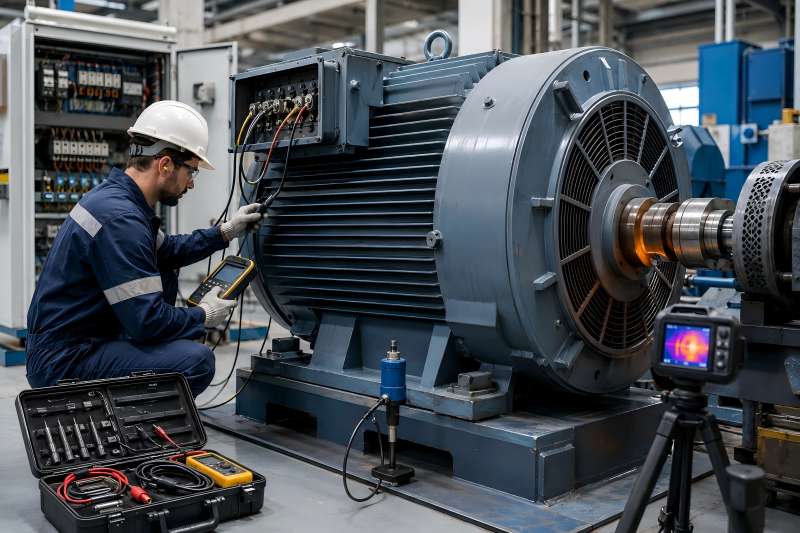
Common Synchronous Motor Problems
| Problem | Common Symptoms | Main Causes | Quick Solution |
| Motor fails to start | No rotation, humming, trip alarm | Wrong wiring, low voltage, starter fault | Check power supply, wiring, starter, and control circuit |
| Loss of synchronism | Motor trips under load, unstable operation | Overload, voltage drop, weak excitation | Reduce load, check voltage, adjust excitation |
| Overheating | High frame temperature, insulation smell | Overload, poor cooling, high current | Improve ventilation, reduce load, inspect current |
| Abnormal vibration | Noise, shaking, loose foundation | Misalignment, bearing wear, rotor imbalance | Align shaft, inspect bearings, tighten base |
| High current | Overload trip, cable heating | Mechanical overload, voltage imbalance | Check load, power supply, and motor parameters |
| Poor power factor | Low efficiency, penalty risk | Incorrect excitation setting | Adjust excitation current |
| Excitation failure | Motor cannot synchronize | AVR, exciter, brush, or field circuit fault | Inspect excitation system and field winding |
| Bearing problems | Grinding noise, high bearing temperature | Poor lubrication, contamination, misalignment | Lubricate or replace bearings |
| Insulation failure | Ground fault, leakage current | Moisture, aging, dust, overheating | Dry, clean, test, or rewind motor |
Synchronous Motor Fails to Start
A synchronous motor may fail to start if the power supply, starting system, excitation system, or load condition is not correct. In many cases, the motor may produce a humming sound but cannot rotate normally.
Common Causes
- Supply voltage is insufficient.
- Phase loss or wrong phase sequence.
- Incorrect wiring connection.
- Starter, contactor, or protection relay failure.
- Load is too heavy during starting.
- Damper winding or starting cage is damaged.
- Control circuit has loose terminals or faulty sensors.
Solutions
First, check the incoming voltage and make sure all three phases are stable. Then inspect the motor wiring according to the nameplate and wiring diagram. If the motor uses a soft starter, VFD, or special starting panel, check the parameter settings and protection alarms. You should also make sure the driven equipment can rotate freely before starting. If the load is jammed, even a healthy motor may fail to start.
Motor Loses Synchronism
Loss of synchronism is one of the most serious problems in synchronous motors. It happens when the motor cannot maintain its magnetic lock with the rotating stator field. The motor may slow down, vibrate, draw high current, or trip suddenly.
Common Causes
- Sudden mechanical overload.
- Large voltage drop in the power system.
- Excitation current is too low.
- Incorrect load angle.
- Poor power supply stability.
- Starting process is not completed correctly.
- Faulty excitation control system.
Solutions
Reduce the load and restart the motor under proper conditions. Check whether the excitation current reaches the required value after starting. If the motor is used in a heavy-duty application such as a compressor, mill, or large pump, avoid sudden load changes. Also inspect the power supply for voltage dips, phase imbalance, and unstable frequency.
Synchronous Motor Overheating
Overheating can damage insulation, shorten motor service life, and cause unplanned shutdowns. A motor that runs hotter than normal should be inspected quickly.
Common Causes
- Long-term overload operation.
- Cooling fan failure or blocked ventilation.
- Dust buildup inside the motor.
- High ambient temperature.
- Voltage imbalance.
- Excessive current.
- Bearing friction.
- Incorrect excitation setting.
Solutions
Measure the motor current and verify it against the rated current shown on the nameplate. Clean dust from cooling channels, fan covers, and air filters. Make sure the motor has enough space for heat dissipation. If the motor is installed in a dusty, humid, or high-temperature environment, improve the enclosure protection and cooling design.
Abnormal Noise and Vibration
Noise and vibration usually indicate mechanical or electrical problems. If ignored, they can lead to bearing failure, shaft damage, coupling damage, or rotor-stator rubbing.
Common Causes
- Shaft misalignment.
- Loose foundation bolts.
- Damaged bearings.
- Rotor imbalance.
- Coupling wear.
- Air gap unevenness.
- Driven equipment vibration.
- Electrical imbalance.
Solutions
Check the motor base, foundation bolts, and coupling alignment. Inspect the bearing temperature and listen for grinding or knocking sounds. If vibration increases after maintenance, the coupling or rotor may need balancing. You should also check whether the vibration comes from the motor itself or from the connected machine.
High Current During Operation
High current is a warning sign. It may come from electrical problems, overload, poor excitation, or mechanical resistance. Long-term high current can overheat windings and damage insulation.
Common Causes
- Motor is overloaded.
- Driven equipment is blocked or jammed.
- Supply voltage is too low.
- Voltage imbalance between phases.
- Incorrect excitation current.
- Bearing friction increases mechanical load.
- Motor parameters do not match the application.
Solutions
Measure the three-phase current and voltage. When one phase shows abnormal current, inspect the power supply and cable connections. If all phases are high, inspect the load condition. For pumps and fans, check whether valves, dampers, or process conditions are causing excessive load.
Poor Power Factor
One advantage of a synchronous motor is that its power factor can be adjusted by changing excitation current. If the excitation is not set correctly, the motor may operate with a poor power factor.
Common Causes
- Under-excitation.
- Over-excitation.
- Incorrect AVR setting.
- Load changes without excitation adjustment.
- Fault in field current control.
Solutions
Adjust the excitation current according to the required power factor. Under-excitation usually causes lagging power factor, while over-excitation can make the motor operate with leading power factor. For plants using synchronous motors for power factor correction, regular monitoring is important.
Excitation System Failure
The excitation system powers the rotor field with DC. If the excitation system fails, the synchronous motor may not start properly, may fail to pull into synchronism, or may trip during operation.
Common Causes
- AVR failure.
- Exciter fault.
- Brush or slip ring wear.
- Field winding open circuit.
- Field circuit short circuit.
- Loose wiring in excitation cabinet.
- Faulty rectifier or diode.
Solutions
Inspect the excitation panel, field current, field voltage, brushes, slip rings, and control signals. If the motor uses a brushless excitation system, check the rotating rectifier and exciter winding. For brushed systems, clean the slip rings and replace worn brushes when needed.
Bearing Overheating or Damage
Bearing problems are common in large industrial motors. Poor lubrication, contamination, misalignment, and excessive vibration can all damage bearings.
Common Causes
- Incorrect grease amount.
- Wrong lubricant type.
- Dust or moisture enters bearing housing.
- Shaft misalignment.
- Coupling stress.
- Bearing aging.
- Excessive axial or radial load.
Solutions
Follow the motor manufacturer’s lubrication schedule. Do not over-grease the bearing, because excessive grease can increase temperature. Check bearing seals, coupling alignment, and vibration levels. If the bearing produces grinding noise or temperature rises quickly, stop the motor and inspect it before serious damage occurs.
Insulation Failure and Ground Fault
Insulation failure can cause leakage current, short circuits, ground faults, and motor burnout. It is often related to moisture, overheating, contamination, or aging.
Common Causes
- Motor operates in a humid environment.
- Dust, oil, or chemicals enter the winding.
- Long-term overheating weakens insulation.
- Voltage spikes damage insulation.
- Poor maintenance.
- Motor has not been used for a long time.
Solutions
Use a megohmmeter to test insulation resistance before starting a motor that has been stored or shut down for a long time. Keep the motor dry and clean. For humid sites, use space heaters or anti-condensation heaters. If insulation resistance is too low, dry the winding before operation.
Speed Instability or Control Problems
A synchronous motor maintains steady speed during normal operation. If speed instability appears, the problem may come from power supply instability, control system faults, load impact, or synchronization failure.
Common Causes
- Power frequency fluctuation.
- Unstable load.
- Control system error.
- Improper starting sequence.
- Excitation fluctuation.
- Mechanical impact from driven equipment.
Solutions
Check the power frequency, excitation stability, and load condition. Review the control logic and protection settings. If the motor is used with a variable frequency drive, confirm that the VFD is suitable for synchronous motor control and that motor parameters are correctly entered.
How to Prevent Synchronous Motor Problems
To reduce synchronous motor failures, you should build a regular inspection plan. Check voltage, current, temperature, vibration, power factor, and excitation current during daily operation. A synchronous motor maintains steady speed during normal operation. During installation, make sure the foundation is stable, the coupling is aligned, and the load can rotate freely. During commissioning, verify the starting sequence, protection settings, and excitation parameters before full-load operation.