
A drainage motor powers the system, while a drain pump moves and removes water. The drainage motor provides the power, while the drain pump performs the actual water transfer. In many compact applications, they operate as one integrated system, which is why the terms are frequently confused.
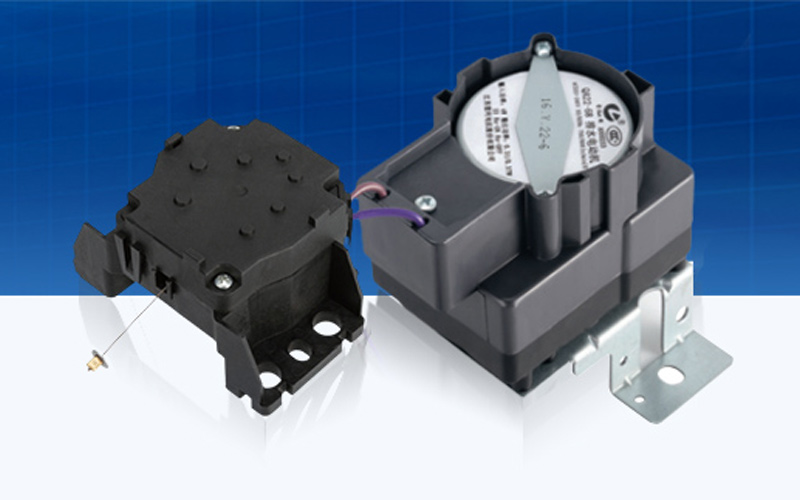
What Is a Drainage Motor?
A drainage motor is an electric motor designed to provide the rotational force required for water drainage applications.
Its primary function is not to move water directly, but to convert electrical energy into mechanical rotation. This rotational movement is then transferred to a pump mechanism, usually through a shaft connection.
A typical drainage motor consists of:
- Stator
- Rotor
- Shaft
- Bearings
- Housing
- Electrical terminals
- Protection components
When electrical power is supplied, the motor creates torque and rotates the shaft. The connected impeller or pump structure then moves water through the drainage system.
In appliance applications, drainage motors are commonly used in compact drainage assemblies where space, noise, and reliability are important factors.
For example, in a washing machine:
Electrical power → Drainage motor rotation → Pump impeller rotation → Water discharge
The motor supplies the force needed for drainage.
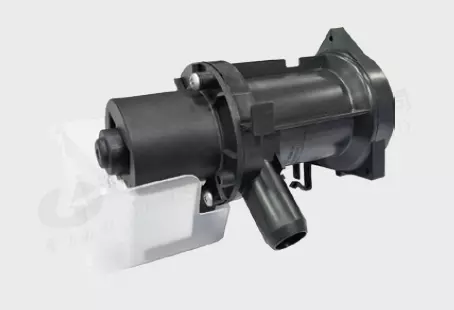
What Is a Drain Pump?
A drain pump is a complete mechanical assembly designed to remove water from a system.
Unlike a drainage motor, a pump directly interacts with water. It includes not only the motor but also the hydraulic components required to create water flow.
A typical drain pump includes:
| Component | Function |
| Motor | Provides rotational power |
| Impeller | Converts rotation into water movement |
| Pump housing | Guides water flow |
| Inlet and outlet ports | Connect water pipelines |
| Sealing system | Prevents water leakage |
The pump moves water through impeller rotation. The rotating blades generate centrifugal force, pushing water from the inlet side toward the outlet side.
A drainage pump is therefore a complete water-handling solution rather than only a power unit. Different drainage pump designs may be selected depending on flow rate, water conditions, and installation requirements.
Drainage Motor vs Drain Pump: Key Differences
Although they are closely related, the main difference is their role in the system.
| Comparison | Drainage Motor | Drain Pump |
| Main Function | Generates mechanical power | Moves and discharges water |
| Works With | Pump mechanism | Water system |
| Contains Hydraulic Parts | No | Yes |
| Main Parameter | Voltage, power, speed, torque | Flow rate, head pressure, capacity |
| Replacement Method | Replace motor component | Replace complete pump assembly |
| Application | Component supplier level | System/application level |
Simply explained:
A drainage motor is the engine. A drain pump is the complete machine that uses the engine to move water.
How Do They Work Together?
In many drainage applications, the motor and pump cannot work independently.
The working process is:
1. Electrical Input
The control system sends electricity to the drainage motor.
The motor starts rotating according to its designed speed and torque requirements.
2. Mechanical Power Transfer
The rotating shaft transfers power to the pump impeller.
The motor determines whether the pump can achieve stable and continuous operation.
3. Water Movement
The impeller creates pressure differences inside the pump chamber.
Water enters from the inlet and exits through the discharge port.
This is why the performance of a drain pump depends heavily on motor characteristics.
A motor with insufficient torque may cause:
- Slow drainage
- Pump blockage
- Unstable operation
- Higher failure rates
A properly matched motor can improve:
- Drainage efficiency
- Operating reliability
- Noise performance
- Service life
Why Are They Often Confused?
The confusion results from different sales methods and application contexts. In household appliances, manufacturers often provide a complete drain pump assembly. Customers usually replace the entire unit instead of purchasing only the motor.
For example, when a washing machine has drainage problems, the replacement part is usually called a “washing machine drain pump,” even though the motor inside is the actual power source.
In industrial supply chains, however, manufacturers may focus specifically on drainage motors because they produce the core drive component.
This difference in terminology depends on the perspective:
| User Perspective | Common Term |
| Appliance repair | Drain pump |
| Appliance manufacturer | Drain pump assembly |
| Motor manufacturer | Drainage motor |
| Component engineer | Motor drive unit |
Performance Comparison: Motor-Level vs Pump-Level
When selecting components, buyers should consider different performance factors.
Drainage Motor Performance Factors
For a drainage motor, important specifications include:
| Parameter | Typical Consideration |
| Voltage | 12V, 24V, 110V, 220V |
| Power | Approximately 10W–100W for compact applications |
| Speed | Commonly several thousand RPM depending on design |
| Noise | Important for household appliances |
| Durability | Continuous start-stop cycles |
The motor needs to provide stable torque while maintaining low energy consumption. For appliance makers, efficiency and durability matter more than maximum power.
Drain Pump Performance Factors
A drain pump is usually evaluated by hydraulic performance.
Important parameters include:
| Parameter | Meaning |
| Flow Rate | Amount of water discharged per unit time |
| Head Height | Maximum vertical lifting capability |
| Water Temperature Range | Operating environment |
| Particle Handling | Ability to tolerate impurities |
| Leakage Protection | Sealing performance |
A pump used for clean appliance water has different requirements from a pump handling wastewater or industrial drainage.
Application Differences
Household Appliances
This is one of the most common applications for compact drainage motors and drain pumps.
Examples:
- Washing machines
- Dishwashers
- Ice machines
- Water treatment equipment
These applications usually require:
- Compact size
- Low noise
- High reliability
- Frequent start-stop operation
For example, a washing machine drain system may only operate for several minutes during each cycle, but it may repeat thousands of times during the product lifetime.
Commercial and Industrial Drainage
Industrial drainage systems normally focus more on pump capacity rather than small motor design.
Applications include:
- Building drainage
- Basement water removal
- Equipment cooling drainage
- Industrial wastewater handling
These systems usually require:
- Higher flow capacity
- Longer operating time
- Stronger protection
- Larger pump structures
Compared with appliance drainage motors, industrial drainage pumps often place more emphasis on hydraulic performance and environmental resistance.
Which Fits Your Needs?
For Appliance Manufacturers
If you are designing washing machines, dishwashers, or similar products, you usually need a drainage motor solution.
The key considerations are:
- Installation space
- Voltage compatibility
- Noise requirements
- Torque performance
- Lifetime cycles
A customized drainage motor can help optimize the complete drainage system.
For System Integrators
If you are building a complete drainage system, a drain pump assembly may be the better choice.
You should focus on:
- Required flow rate
- Water characteristics
- Pump installation method
- Operating conditions
Common Misunderstandings About Drainage Motors and Drain Pumps
“A stronger motor always means better drainage”
Not necessarily.
Drainage performance depends on the combination of:
- Motor torque
- Impeller design
- Pump chamber structure
- Flow resistance
A high-power motor with a poorly designed pump may not improve drainage efficiency.
“The motor and pump can always be replaced separately”
This depends on the design.
Some systems use independent motors and pumps, while many compact appliances use integrated assemblies.
Before replacement, engineers should confirm:
- Shaft connection
- Mounting dimensions
- Electrical specifications
- Waterproof structure
“All drain pumps are the same”
Different applications require different designs.
A washing machine drain pump focuses on compact operation, while an industrial drainage pump focuses on flow capacity and durability.
Choosing the wrong type can result in:
- Reduced efficiency
- Premature failure
- Increased maintenance costs
When developing a new appliance or drainage solution, the best approach is not simply choosing a stronger motor or larger pump. Instead, the motor and pump should be matched according to the required flow performance, operating environment, and application conditions.