
Power factor and efficiency answer different questions, and neither should be used alone to predict energy savings from a permanent magnet synchronous motor. Buyers should distinguish the motor’s electrical operating condition from the inverter’s grid-side behavior, then compare real electrical energy at a consistent system boundary. A credible proposal states what was measured, where it was measured, and which operating conditions apply.
Why Does a Higher Power Factor Not Equal the Same Increase in Efficiency?
Efficiency relates useful output power to input power, while power factor relates real power to apparent power at an electrical boundary. Improving one quantity does not establish an identical percentage change in the other. A purchasing comparison becomes unreliable when these terms are used interchangeably in a savings calculation.
An installation can benefit from reduced current demand under suitable conditions, but the effect depends on the equipment and supply arrangement. It does not follow that every percentage-point improvement in a quoted motor power factor produces the same percentage reduction in billed energy. Energy consumption must be calculated or measured using real power over time.
The Leili permanent magnet synchronous motor range provides a starting point for discussing motor performance. When a specification lists power factor, ask for the operating point and measurement convention. Keep that value separate from efficiency and from any statement about the complete drive installation.
Where Is the Electrical Boundary in a Drive-Fed System?
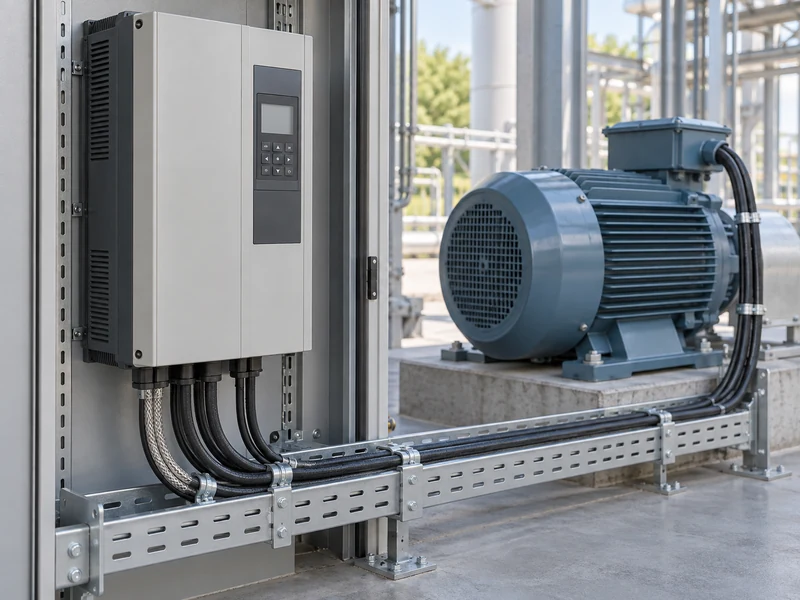
A drive-fed system has at least two important electrical boundaries: the inverter input and its output toward the motor. The waveform and power relationships at these locations differ. A motor-side value therefore cannot automatically describe the current drawn from the building supply.
The US Department of Energy’s motor and drive system sourcebook discusses system performance, power factor, and drive-related electrical considerations. Its system perspective supports identifying the measurement boundary before comparing equipment. Use the actual inverter data and suitable measurements for the proposed installation rather than transferring a motor-side figure to the grid connection.
Draw a simple boundary around the items included in the comparison. Decide whether the meter includes the inverter, motor, cooling equipment, and other auxiliaries. Keep this same boundary for the baseline and proposed arrangement, or state the adjustments needed to make them comparable.
What Do Real Power, Apparent Power, and Energy Each Describe?
Real power describes the rate of electrical energy transfer that contributes to work and losses within the selected boundary. Apparent power relates voltage and current magnitude, while energy accumulates real power over time. These quantities can all matter commercially, but they should occupy different rows in the project evaluation.
For an illustrative operating condition, 20 kW of real input maintained for 100 hours represents 2,000 kWh. Changing a separately quoted apparent-power value does not change that arithmetic unless real input or operating duration also changes. This example explains the distinction and is not a prediction for a Leili motor.
| Quantity | Question It Helps Answer | Information Needed |
| Real power | How much electrical power is entering? | Measurement boundary and duty |
| Energy | How much is consumed over time? | Real power and operating hours |
| Apparent power | What electrical loading is present? | Voltage, current, and method |
| Power factor | How do real and apparent power relate? | Definition and waveform context |
| Efficiency | How much input becomes useful output? | Input and output measurements |
The site’s tariff determines how these quantities affect charges. Some facilities face costs related to demand or power factor in addition to energy, while others have a different billing structure. Use the actual tariff and electrical study for the financial assessment rather than assuming a universal charging method.
Why Must Waveform Conditions Be Considered?
Power-factor terminology becomes more complicated when current and voltage are not simple sinusoids. A displacement-related value and a true power-factor value do not necessarily describe the same thing. Ask the supplier or measurement specialist which quantity is being reported and whether the instrument is appropriate for the waveform.
The inverter’s input arrangement and operating condition influence what the supply sees. Motor replacement alone does not establish the harmonic performance of the complete installation. If the project includes supply-quality requirements, obtain drive-side evidence that directly addresses those requirements under the agreed conditions.
Avoid proposing electrical correction equipment from a motor catalogue value alone. Such changes require an assessment of the actual network and the converter arrangement by a qualified electrical engineer. The purpose of the buyer’s worksheet is to identify the question clearly, not to substitute a general rule for installation-specific design.
How Should an Energy-Saving Claim Be Reconstructed?
Ask the proposer to show the baseline input, proposed input, operating hours, and useful output for each significant duty state. The calculation should identify which changes arise from motor losses, drive losses, process control, or operating schedule. This prevents a benefit from revised pump or fan operation being attributed entirely to the motor.
Where only rated efficiency is supplied, request evidence at relevant part-load states before treating the annual estimate as established. A machine that rarely operates at the rated point may not obtain the annual result implied by a single catalogue value. The uncertainty should be visible in the proposal rather than hidden by a precise payback figure.
Motor construction and control affect the operating behavior, but neither topic justifies skipping the measurement boundary. Leili’s comparison of surface-mounted and interior PMSM designs provides related design context. Use model-specific performance evidence to evaluate the candidate rather than assuming every design in a category has identical losses.
Which Measurements Make a Before-and-After Test Useful?
Use a suitable power measurement method at the agreed boundary and record the operating state at the same time. For a process machine, include the output that must remain equivalent, such as the required flow or production rate. A lower input reading is meaningful only when the service delivered is understood.
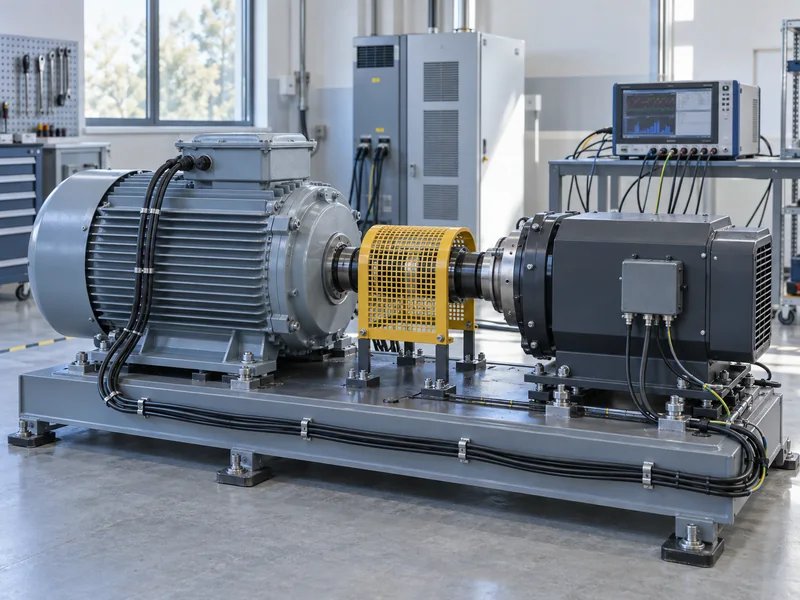
Record the drive configuration and relevant control settings used during the comparison. Changes in speed command or process regulation can affect consumption independently of motor efficiency. The article on FOC and DTC control strategies offers background, while the test record must identify the actual implementation.
Temperature and cooling conditions also deserve attention when comparing measurements. A test taken shortly after starting and another taken after prolonged operation may not represent equivalent conditions. The related explanation of PMSM overheating helps frame thermal questions, but the agreed test method should define the comparison conditions.
What Questions Should Procurement Ask About the Proposal?
Procurement should ask for separate statements covering motor efficiency, complete-system input, grid-side electrical behavior, and the financial assumptions. These statements can then be reviewed by the people responsible for mechanical performance, electrical integration, and operating cost. Combining them into one headline percentage makes technical review unnecessarily difficult.
Request the following clarifications before accepting a savings estimate:
- Which equipment is inside the measurement boundary?
- Which operating states and annual hours are included?
- Is useful process output equivalent in both cases?
- Which values are measured, simulated, or assumed?
- What site tariff and demand assumptions are used?
- What test will verify the claimed improvement?
The Leili industrial applications page can help connect the enquiry to the intended equipment. Attach the site’s actual duty and electrical arrangement so that the supplier can respond to the right system question. A broad claim about efficient motors is less useful than a qualified answer for the proposed installation.
What Should the Final Comparison Show?
The final comparison should show energy consumption and any other electrical or commercial benefits as separate, traceable results. It should retain the distinction between a motor rating and a grid-side measurement. Any uncertainty about operating hours, part-load performance, or tariff treatment should remain explicit.
Separating the electrical quantities gives a purchaser a clearer way to recognize the PMSM’s contribution: each claimed benefit can be traced to the measurement or calculation that supports it. Buyers can see which benefits have been established and which require site verification. Suppliers can then support a technically clear proposal instead of defending an ambiguous headline about power factor and savings.