
A fan driven by a permanent magnet synchronous motor may still be rotating when a restart command arrives, so the restart requirement must describe shaft motion as well as the command sequence. The motor, inverter, and machine controls should be reviewed together for the permitted speed, direction, interruption duration, and recovery behavior. A successful start from rest does not prove that the same system can restart a moving fan correctly.
Why Can a Fan Remain in Motion After the Drive Stops?
A fan stores rotational energy and may take time to coast down, while airflow through the system can also influence shaft motion. Depending on the installation, external airflow can sustain rotation or cause a direction that differs from the commanded direction. The actual behavior should be observed and documented rather than assumed from the stop command alone.
When selecting from Leili’s permanent magnet synchronous motors, describe the fan and airflow arrangement as part of the enquiry. Include relevant dampers, parallel equipment, and process conditions that can affect rotation. These details help the drive supplier assess the restart case that the machine will actually encounter.
Do not treat an electrical stop indication as proof that all mechanical movement has ended. Operating logic and maintenance isolation serve different purposes. The restart design should state how shaft condition is established for normal operation, while servicing must follow the site’s approved hazardous-energy procedures.
Which Restart Scenarios Should Be Listed?
List normal stop-and-start operation, a short supply interruption, a process pause, and recovery after a permitted fault condition where those events are relevant. Each scenario should identify whether the shaft is expected to be stationary, coasting forward, or potentially moving in another direction. The control response can then be specified for each state.
A scenario should also state whether automatic recovery is permitted by the machine’s risk assessment and process requirements. Some applications need a controlled return to service, while others require an operator decision. This distinction belongs in the machine specification rather than being left to a default inverter setting.
| Scenario | Condition to Establish | Required Decision |
| Routine restart | Stopped or coasting shaft | Permitted start method |
| Brief interruption | Residual speed and direction | Recovery or deliberate stop |
| External airflow | Possible sustained rotation | Approved handling of motion |
| Process fault | Fault cause and reset state | Whether restart is allowed |
| Maintenance return | Completed site handover | Authorized return to operation |
Define the operational objective for each scenario, such as an acceptable recovery time or a maximum permitted process interruption. Avoid specifying only that the drive must have a named restart feature. The feature’s suitability depends on the supported motor type and the conditions under which it has been validated.
What Should Be Asked About Inverter Compatibility?
Ask whether the proposed inverter supports the required moving-shaft restart behavior with the exact PMSM configuration. Request the applicable speed and direction conditions, feedback requirements, and limitations. A feature available for another motor type or another software release should not be assumed to apply.
The drive supplier should explain how the approved arrangement establishes the state needed for a controlled restart. Buyers do not need to prescribe the internal algorithm, but they do need an answer tied to the actual motor and application. Record any requirement for sensors, additional hardware, or a controlled waiting period.
Leili’s discussion of FOC and DTC control methods provides general background on PMSM control. It does not establish that a specific drive can perform every restart sequence. Obtain confirmation for the named hardware, software, and parameter arrangement proposed for the fan.
How Should Deceleration and Stored Energy Be Considered?
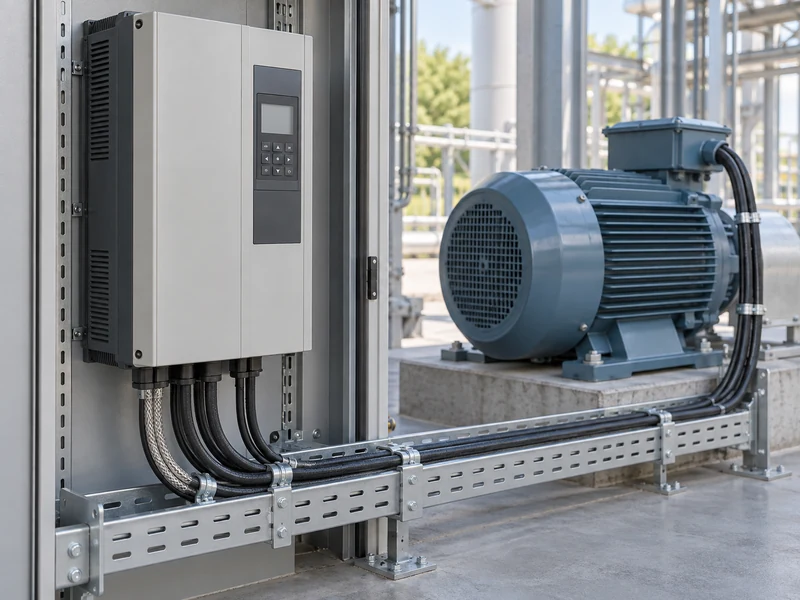
The required deceleration affects how energy is handled by the complete drive system. A gentle coast and a commanded rapid stop impose different demands. The supplier should review the fan inertia and stopping requirement before confirming the necessary converter arrangement and any associated equipment.
Do not assume that shortening a deceleration time is a harmless control adjustment. It can change electrical and mechanical demands, as well as the pressure behavior of the connected process. Any revised stop or recovery sequence should remain within the limits approved by the motor, drive, and machine engineering teams.
Where the process can tolerate a longer interruption, a simpler approved sequence may be preferable to a more complex rapid recovery arrangement. Where continuity is critical, the evidence required for the recovery function should be correspondingly stronger. Make that tradeoff explicit instead of asking for the fastest possible restart without describing its purpose.
Which Mechanical and Thermal Conditions Affect Repeated Restarts?
Repeated acceleration can impose demands that are not apparent from steady fan operation. Include the number of starts, the time between them, and the initial operating condition in the duty description. The permitted pattern should be confirmed for the motor and inverter together.
Thermal recovery matters when interruptions cluster closely together. A system that completes one successful restart from a cool condition may behave differently after several events during a demanding shift. Leili’s article on PMSM overheating causes provides useful context, while the supplier must confirm the limits for the actual duty.
Observe vibration and mechanical behavior during transitions as well as during steady operation. A symptom associated with a particular speed range can be missed when testing only the final operating point. The related discussion of PMSM bearing noise and vibration can help organize follow-up observations without treating every transient symptom as a motor defect.
What Should an Approved Restart Test Demonstrate?
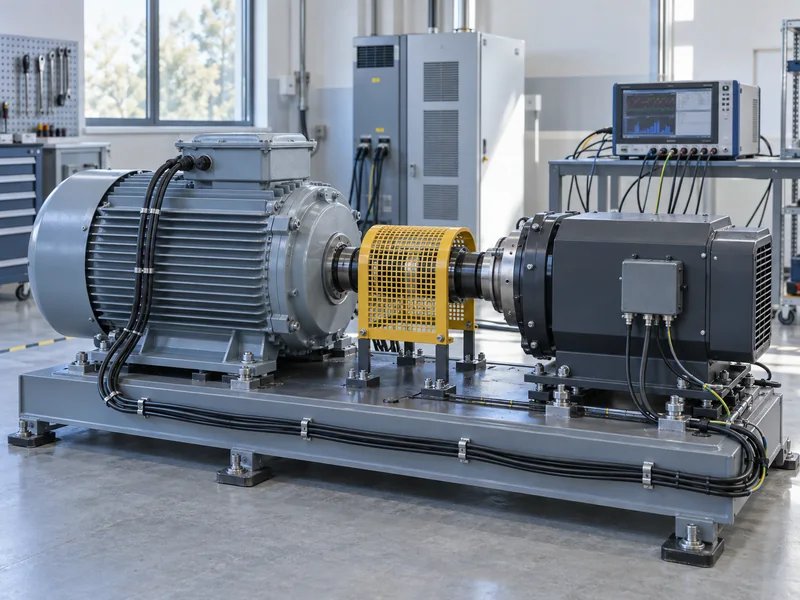
An approved test should reproduce the agreed operating scenarios within the site’s safe commissioning procedure and demonstrate the specified response. Record shaft condition, command sequence, load context, recovery time, and any relevant drive indications. A simple statement that the fan restarted does not explain which scenario was tested.
Establish the test boundary and responsible personnel before attempting interruption or recovery tests. The machine builder should determine how the process and connected equipment are protected during commissioning. This article identifies specification questions and does not provide a procedure for deliberately creating electrical faults or exposing rotating equipment.
For maintenance-related work in applicable US workplaces, OSHA’s hazardous-energy guidance explains the role of energy-control procedures. A software restart setting is not a substitute for the required isolation and verification process. The plant should keep operational recovery logic and maintenance authorization clearly separated in its documentation.
How Can the Requirements Be Written into an Enquiry?
Use a scenario sheet with the initial shaft condition, triggering event, permitted response, and acceptance criterion for each case. Attach the fan inertia or the best available supporting information, along with the expected speed range and airflow conditions. Identify uncertainties so that the supplier can request additional measurements where necessary.
The Leili industrial applications overview is a useful starting point for discussing the complete equipment context. State whether the enquiry concerns a new installation or replacement of an existing motor and drive. A retrofit may have control, space, or process limitations that do not exist in a new machine design.
Ask the supplier to identify unsupported scenarios explicitly. A clear limitation allows the machine engineer to define an alternative response, while an ambiguous assurance can leave the site dependent on untested behavior. The resulting document should be specific enough that a commissioning engineer can tell what evidence is still missing.
What Records Should Remain with the Installed Fan?
Retain the approved restart scenarios, drive configuration, test results, and operating instructions with the asset record. Note which changes require engineering review, including software updates, feedback changes, and modifications to fan inertia or airflow arrangements. These changes can invalidate assumptions behind the original recovery behavior.
Operators should have a concise description of the permitted response to routine interruptions and the conditions requiring assistance. Engineering records can hold the detailed parameters and test evidence. Together, these documents make the restart capability understandable and maintainable throughout the life of the installation.