
August 21, 2026

News

AC Drainage Motor vs DC Drainage Motor: Key Differences Explained

Both AC drainage motors and DC drainage motors have their own advantages. AC drainage motors remain a reliable and economical choice for applications requiring stable operation and simple installation. DC drainage motors provide greater flexibility, efficiency, and control capability, making them increasingly suitable for modern intelligent equipment. What Is a Drainage Motor? A drainage motor is a compact electric motor designed to drive a drainage pump or water removal mechanism. Its main function is to convert electrical energy into mechanical power, allowing the pump to move condensate water, wastewater, or other liquids away from equipment. Drainage motors are commonly found in: Air conditioning units Refrigeration systems Dehumidifiers Washing machines Industrial cooling equipment Medical equipment Commercial water management systems Although the operating principle is similar to other electric motors, drainage motors usually require special characteristics such as: Stable operation under frequent starts and stops Compact size Low noise output Resistance to moisture and humidity Long service life under continuous operation The choice between AC and DC technology mainly depends on the electrical design of the equipment and the required control performance. Basic Difference Between AC and DC Drainage Motors The fundamental difference between AC and DC drainage motors is the type of electrical power they use. An AC drainage motor uses alternating current with periodic directional changes. These motors are commonly connected directly to household or industrial AC power supplies, such as 110V, 220V, or 380V systems. A DC drainage motor uses direct current flowing in a single direction. These motors typically work with lower-voltage DC power sources, such as 12V, 24V, or 48V systems, often supplied through adapters, batteries, or power conversion modules. This difference influences their structure, efficiency, control method, and application range. Comparison AC Drainage Motor DC Drainage Motor Power Supply AC voltage directly DC voltage through power supply Common Voltage 110V, 220V, 380V 12V, 24V, 48V Control Method Usually fixed-speed operation Easier speed and performance control Structure Simple and durable More compact with electronic control Efficiency Good for stable operation Generally higher efficiency at variable loads Typical Use Industrial and commercial equipment Compact and intelligent equipment AC Drainage Motor: Advantages and Applications Simple Structure and Reliable Operation One of the biggest advantages of AC drainage motors is their simple mechanical structure. Traditional AC motors usually contain fewer electronic components compared with modern DC motor systems. This makes them highly reliable, especially in applications where the motor only needs to perform a basic drainage function. For example, in a commercial air conditioning system, the drainage motor may only need to start when condensate water reaches a certain level. A simple AC motor can complete this task efficiently without requiring complex control systems. The reduced electronic complexity also means fewer potential failure points, which can be beneficial in harsh industrial environments. Direct Connection to Standard Power Systems Many buildings and factories already use AC power infrastructure. Because of this, AC drainage motors can often be installed without additional power conversion equipment. This provides several benefits: Easier installation Lower initial equipment cost Reduced system complexity Convenient replacement during maintenance For large commercial equipment manufacturers, AC motors remain a practical choice because they can be integrated into existing electrical designs. Stable Performance for Continuous Operation AC drainage motors are particularly suitable for applications requiring consistent operating speed. For example, a drainage system that continuously removes condensate water from an industrial cooling unit usually does not need frequent speed adjustments. In this situation, a reliable AC motor can provide stable performance for long periods. Typical AC drainage motors may operate continuously for thousands of hours when properly designed and maintained. DC Drainage Motor: Advantages and Applications Higher Efficiency in Variable Operating Conditions DC drainage motors have become increasingly common because modern equipment often requires better energy management. Unlike traditional fixed-speed AC motors, DC motors can adjust operating speed according to actual demand. When drainage requirements are low, the motor can operate at reduced speed, reducing unnecessary energy consumption. For example, a smart dehumidifier may not need maximum drainage capacity all the time. A DC drainage motor can automatically adjust output based on water generation conditions, improving overall efficiency. In applications with frequent load changes, DC motors can achieve noticeable energy savings compared with fixed-speed alternatives. Compact Design and Flexible Installation DC motors are generally easier to design into compact equipment because they can achieve high power density with smaller dimensions. This makes them suitable for: Portable cooling equipment Compact refrigeration systems Household appliances Battery-powered devices Mobile equipment As equipment manufacturers continue developing smaller and smarter products, the demand for compact DC drainage motors has increased. Better Speed Control and Intelligent Functions One major advantage of DC drainage motors is their compatibility with electronic control systems. Through controllers or integrated circuits, DC motors can provide functions such as: Variable speed operation Soft start Overload protection Automatic adjustment Remote monitoring compatibility These features are especially valuable in modern equipment where drainage performance needs to be optimized according to real-time conditions. Performance Comparison: AC vs DC Drainage Motor When comparing actual performance, neither AC nor DC drainage motors are universally better. Selection depends on specific application needs. Performance Factor AC Drainage Motor DC Drainage Motor Energy Efficiency Suitable for constant operation Better for variable operation Speed Adjustment Limited Excellent Noise Control Good Usually better with optimized control Maintenance Simple structure Requires electronic components Initial Cost Lower Usually higher System Integration Easier with AC systems Better for smart equipment Energy Consumption Comparison Energy efficiency matters more as manufacturers seek lower operating costs. Assuming two drainage motors provide similar pumping capacity: An AC motor may operate continuously at a fixed speed. A DC motor can adjust speed based on drainage demand. For a system running 10 hours per day, a DC motor that reduces average operating power by approximately 20%–30% could significantly reduce annual electricity consumption. However, this advantage depends on operating conditions. If the motor always needs to run at full capacity, the energy difference may become smaller. Therefore, selecting a DC motor only for efficiency reasons

Drainage Motor vs Drain Pump
News

Drainage Motor vs Drain Pump: What Is the Difference?

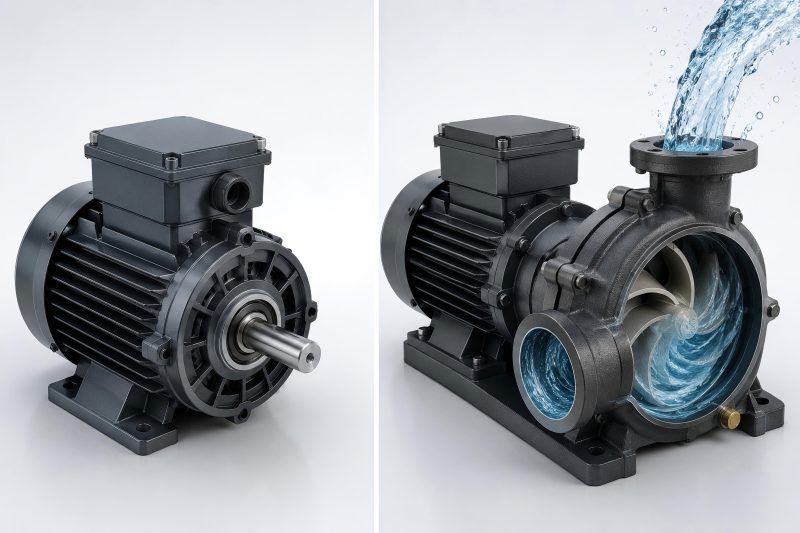
A drainage motor powers the system, while a drain pump moves and removes water. The drainage motor provides the power, while the drain pump performs the actual water transfer. In many compact applications, they operate as one integrated system, which is why the terms are frequently confused. What Is a Drainage Motor? A drainage motor is an electric motor designed to provide the rotational force required for water drainage applications. Its primary function is not to move water directly, but to convert electrical energy into mechanical rotation. This rotational movement is then transferred to a pump mechanism, usually through a shaft connection. A typical drainage motor consists of: Stator Rotor Shaft Bearings Housing Electrical terminals Protection components When electrical power is supplied, the motor creates torque and rotates the shaft. The connected impeller or pump structure then moves water through the drainage system. In appliance applications, drainage motors are commonly used in compact drainage assemblies where space, noise, and reliability are important factors. For example, in a washing machine: Electrical power → Drainage motor rotation → Pump impeller rotation → Water discharge The motor supplies the force needed for drainage. What Is a Drain Pump? A drain pump is a complete mechanical assembly designed to remove water from a system. Unlike a drainage motor, a pump directly interacts with water. It includes not only the motor but also the hydraulic components required to create water flow. A typical drain pump includes: Component Function Motor Provides rotational power Impeller Converts rotation into water movement Pump housing Guides water flow Inlet and outlet ports Connect water pipelines Sealing system Prevents water leakage The pump moves water through impeller rotation. The rotating blades generate centrifugal force, pushing water from the inlet side toward the outlet side. A drainage pump is therefore a complete water-handling solution rather than only a power unit. Different drainage pump designs may be selected depending on flow rate, water conditions, and installation requirements. Drainage Motor vs Drain Pump: Key Differences Although they are closely related, the main difference is their role in the system. Comparison Drainage Motor Drain Pump Main Function Generates mechanical power Moves and discharges water Works With Pump mechanism Water system Contains Hydraulic Parts No Yes Main Parameter Voltage, power, speed, torque Flow rate, head pressure, capacity Replacement Method Replace motor component Replace complete pump assembly Application Component supplier level System/application level Simply explained: A drainage motor is the engine. A drain pump is the complete machine that uses the engine to move water. How Do They Work Together? In many drainage applications, the motor and pump cannot work independently. The working process is: 1. Electrical Input The control system sends electricity to the drainage motor. The motor starts rotating according to its designed speed and torque requirements. 2. Mechanical Power Transfer The rotating shaft transfers power to the pump impeller. The motor determines whether the pump can achieve stable and continuous operation. 3. Water Movement The impeller creates pressure differences inside the pump chamber. Water enters from the inlet and exits through the discharge port. This is why the performance of a drain pump depends heavily on motor characteristics. A motor with insufficient torque may cause: Slow drainage Pump blockage Unstable operation Higher failure rates A properly matched motor can improve: Drainage efficiency Operating reliability Noise performance Service life Why Are They Often Confused? The confusion results from different sales methods and application contexts. In household appliances, manufacturers often provide a complete drain pump assembly. Customers usually replace the entire unit instead of purchasing only the motor. For example, when a washing machine has drainage problems, the replacement part is usually called a “washing machine drain pump,” even though the motor inside is the actual power source. In industrial supply chains, however, manufacturers may focus specifically on drainage motors because they produce the core drive component. This difference in terminology depends on the perspective: User Perspective Common Term Appliance repair Drain pump Appliance manufacturer Drain pump assembly Motor manufacturer Drainage motor Component engineer Motor drive unit Performance Comparison: Motor-Level vs Pump-Level When selecting components, buyers should consider different performance factors. Drainage Motor Performance Factors For a drainage motor, important specifications include: Parameter Typical Consideration Voltage 12V, 24V, 110V, 220V Power Approximately 10W–100W for compact applications Speed Commonly several thousand RPM depending on design Noise Important for household appliances Durability Continuous start-stop cycles The motor needs to provide stable torque while maintaining low energy consumption. For appliance makers, efficiency and durability matter more than maximum power. Drain Pump Performance Factors A drain pump is usually evaluated by hydraulic performance. Important parameters include: Parameter Meaning Flow Rate Amount of water discharged per unit time Head Height Maximum vertical lifting capability Water Temperature Range Operating environment Particle Handling Ability to tolerate impurities Leakage Protection Sealing performance A pump used for clean appliance water has different requirements from a pump handling wastewater or industrial drainage. Application Differences Household Appliances This is one of the most common applications for compact drainage motors and drain pumps. Examples: Washing machines Dishwashers Ice machines Water treatment equipment These applications usually require: Compact size Low noise High reliability Frequent start-stop operation For example, a washing machine drain system may only operate for several minutes during each cycle, but it may repeat thousands of times during the product lifetime. Commercial and Industrial Drainage Industrial drainage systems normally focus more on pump capacity rather than small motor design. Applications include: Building drainage Basement water removal Equipment cooling drainage Industrial wastewater handling These systems usually require: Higher flow capacity Longer operating time Stronger protection Larger pump structures Compared with appliance drainage motors, industrial drainage pumps often place more emphasis on hydraulic performance and environmental resistance. Which Fits Your Needs? For Appliance Manufacturers If you are designing washing machines, dishwashers, or similar products, you usually need a drainage motor solution. The key considerations are: Installation space Voltage compatibility Noise requirements Torque performance Lifetime cycles A customized drainage motor can help optimize the complete drainage system. For System Integrators If you

Scroll to Top

Send Message

    We are a manufacturing factory to provide you with high-quality B2B services. Welcome to batch customer consultation. Our company has a minimum order quantity requirement, which needs to be greater than or equal to 500 pcs. (the minimum order quantity of different products is different) Please be sure to inform the order quantity so that we can reply to your information.

    Please fill out the form below and we will contact you as soon as we receive the feedback. The fields marked with “*” are required

      We are a manufacturing factory to provide you with high-quality B2B services. Welcome to batch customer consultation. Our company has a minimum order quantity requirement, which needs to be greater than or equal to 500 pcs. (the minimum order quantity of different products is different) Please be sure to inform the order quantity so that we can reply to your information.