
Axial flux motor efficiency results should be compared only when input and output boundaries, operating points, thermal conditions, and measurement methods are compatible. A motor-only efficiency figure cannot directly rank complete drive systems with different inverters or cooling auxiliaries. Buyers should define the intended comparison before accepting a headline percentage as evidence of lower operating cost.
What Is Inside the Efficiency Boundary?
The boundary determines which losses the efficiency figure includes. A motor-terminal input measurement and shaft-output measurement describe a different system from a grid-input measurement that includes an inverter and external cooling equipment. The terminal-to-shaft result addresses motor conversion performance, whereas the broader boundary can help evaluate electricity use by the installed drive package.
For a candidate from the Leili axial flux motor family, ask the supplier to state the boundary associated with any quoted efficiency. Keep the motor performance claim separate from the installation’s overall electrical consumption. If the project seeks annual cost reduction, the system boundary may need to include equipment outside the motor itself.
Draw the boundary on a simple system diagram and list excluded loads. This prevents later disagreement over whether a cooling pump, fan, controller, or other auxiliary was included. Use the same boundary for competing proposals or show the adjustments necessary to make them comparable.
Why Must the Operating Point Match?
Efficiency varies with operating conditions, so values measured at different torque and speed cannot be treated as an equivalent comparison. A peak efficiency point may be interesting without representing the machine’s normal duty. Compare the points that matter to the intended application and preserve their associated conditions.
The Leili 30 kW axial flux motor listing shows variants with different speeds and cooling arrangements. This is a practical reminder that a shared power label does not define one universal test condition. Identify the exact variant and rating before comparing its published data with another candidate.
If annual operation includes several states, keep a separate energy calculation that uses the expected hours at each state. Do not average efficiency percentages without considering the relevant input and output quantities. The annual model should remain traceable to the measured or justified data used for each operating point.
| Comparison Item | What Must Be Aligned | Risk If Omitted |
| Boundary | Included equipment and losses | Unlike systems appear comparable |
| Operating point | Torque and speed | A best point represents normal duty |
| Thermal state | Relevant stabilized conditions | Temperature differences distort the result |
| Cooling services | Specified inlet or air conditions | Test conditions cannot be reproduced |
| Measurement method | Instruments and uncertainty | Small differences are overstated |
Which Measurements Establish Mechanical Output?
Shaft output is commonly determined from torque and rotational speed using a suitable measurement arrangement. The test record should identify where these quantities are measured and how the equipment is installed. A torque estimate generated by a controller is not automatically equivalent to an independently validated shaft measurement.
The coupling, load machine, and instrumentation arrangement can influence the test setup and its practical limitations. Document the configuration sufficiently for a reviewer to understand what is being measured. Where a different approved method is used, state it clearly rather than implying a measurement that did not occur.
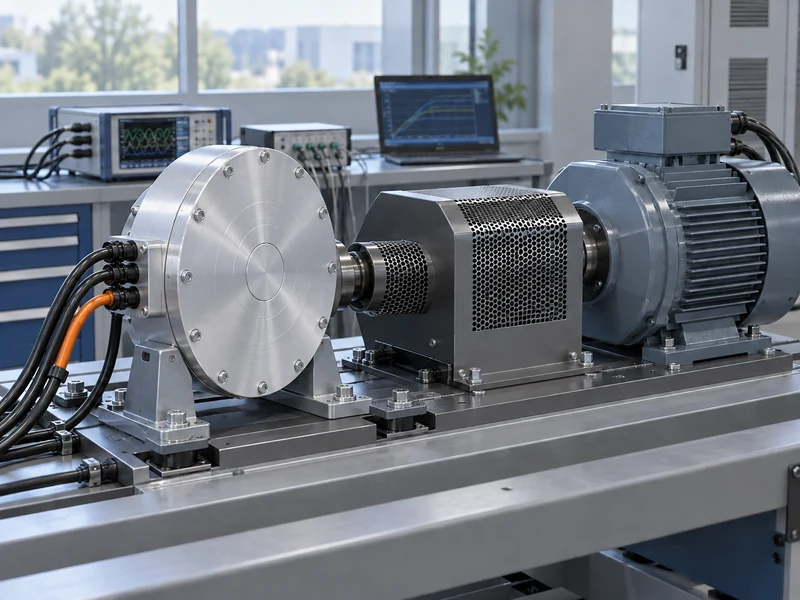
Agree how fluctuations and averaging will be handled. A steady display can conceal changing load if the averaging period is not understood. Preserve enough information to show that the reported operating point is representative of the intended test condition.
How Should Measurement Uncertainty Affect the Decision?
Measurement uncertainty should be considered when deciding whether an apparent efficiency difference is meaningful. A narrow difference between two reported values may not support a confident ranking if the methods and uncertainty are unknown. Request the supporting information before drawing a commercial conclusion from small decimal differences.
NIST’s guidance on measurands defined by measurement methods explains why method implementation contributes to uncertainty beyond simple repeatability. Applied here, the buyer should ask how input and output measurements were obtained and combined. Repeating a reading is useful, but does not resolve every source of uncertainty in the efficiency result.
The acceptance agreement should state how uncertainty is handled when a measured value lies close to a specified limit. Decide this before the test rather than negotiating after an inconvenient result. The same decision rule should apply to all candidates being compared.
Why Do Temperature and Cooling Need Their Own Record?
Temperature can affect losses, and the cooling arrangement determines whether the tested operating condition can be sustained. Record the relevant initial and operating temperatures, the test duration, and the cooling services supplied. A short measurement under favorable laboratory conditions may not describe the installed machine’s sustained operation.
Leili’s discussion of axial flux motor cooling methods provides context for the available heat-removal arrangements. The comparison should use the conditions applicable to the selected motor and include cooling auxiliary consumption when it lies inside the agreed boundary. Keep thermal capability and efficiency as related but distinct acceptance questions.
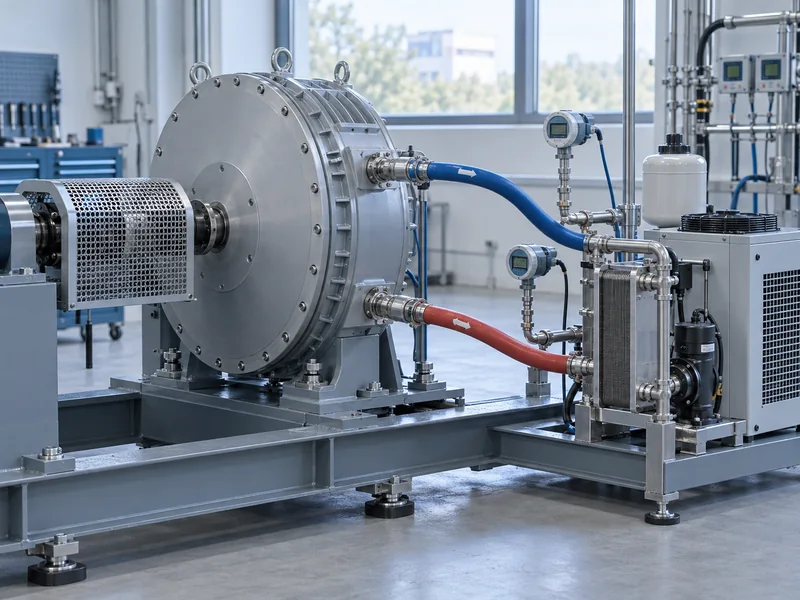
If the site cannot reproduce the supplier’s cooling conditions, request an assessment for the actual installation. Do not assume that the same efficiency or continuous-duty conclusion transfers unchanged. The difference may affect both motor selection and the cost of the supporting equipment.
How Can Topology Comparisons Be Kept Fair?
Compare complete, identified designs under equivalent requirements rather than treating a topology name as a guaranteed efficiency level. Rotor arrangement, materials, dimensions, winding design, control, and cooling all influence a particular motor. A broad structural category cannot establish the measured performance of every product within it.
Leili’s article on single-rotor versus dual-rotor axial flux designs helps explain the design choices. Use it as background for supplier questions, while relying on model-specific evidence for the efficiency comparison. Avoid assigning one candidate an assumed advantage solely because its construction sounds more advanced.
Manufacturing configuration should also be identified when results come from a representative prototype or type test. The existing overview of the axial flux motor manufacturing process gives related context. Ask whether the supplied configuration corresponds to the tested one and what changes could affect the result.
What Does a Useful Supplier Test Report Look Like?
A useful report identifies the motor, inverter where relevant, software or settings, test method, instruments, operating points, and cooling conditions. It states the result without obscuring the boundary or uncertainty. Supporting raw data or trend information should be available where needed to interpret the conclusion.
The report should distinguish measured values from calculated or extrapolated values. If a performance map includes both, make their status visible rather than presenting every cell as an observed test point. This allows the buyer to decide where additional evidence is justified by the application.
Request an explanation for excluded loads and any correction applied to the measurements. A correction can be legitimate, but it must be described consistently. The reviewer should be able to follow the result from the measurement boundary to the reported efficiency without guessing which losses were added or removed.
How Can an Apparently Better Result Be Misinterpreted?
Imagine two hypothetical reports: one states motor-terminal efficiency at a favorable operating point, while the other measures grid input for a complete installation at normal production duty. Ranking their percentages directly would mix both a boundary difference and an operating-point difference. Neither report is necessarily wrong, but they do not establish the comparison the buyer wants.
First ask each supplier for results at the common duty and boundary. If equivalent evidence is unavailable, show the limitation in the evaluation and decide whether another test is justified. Do not invent an adjustment for inverter or cooling losses merely to fill a comparison table.
The same approach applies when a quoted maximum is compared with a measured average over changing duty. Reconstruct what each number represents before using it commercially. A transparent unresolved comparison is preferable to a precise ranking that depends on assumptions no supplier has confirmed.
How Should Efficiency Evidence Be Used in a Purchase Decision?
Use compatible efficiency data together with duty capability, installation needs, service requirements, and commercial scope. The highest isolated percentage does not automatically identify the lowest-cost or most suitable system. A candidate that performs well at the actual operating states may be preferable to one with a better peak figure elsewhere.
For an energy project, convert the relevant data into a transparent annual model and plan a site verification at the agreed boundary. Retain the assumptions about hours, load, and auxiliary consumption. The final decision then rests on a comparison that can be explained, reproduced, and updated when the machine’s operating pattern changes.