
An axial flux motor’s continuous torque should be evaluated with its speed, cooling conditions, temperature limits, and test duration clearly defined. A brief peak-torque result cannot establish that the motor will sustain the same demand throughout a production shift. Buyers should request evidence that matches the actual duty and distinguishes continuous operation from temporary overload.
What Does a Continuous Torque Claim Need to Specify?
The claim needs an operating point and a defined thermal environment. Speed, coolant or air conditions, ambient temperature, and the applicable limits all influence what the motor can sustain. Without these conditions, a torque figure is incomplete for selection.
When reviewing the Leili axial flux motor range, use the exact model and cooling arrangement in the enquiry. Do not assume that every motor within the same power group has the same continuous torque. Power, speed, and torque describe a connected operating point, while thermal capability determines whether the required duty is supportable.
Ask whether the quoted value comes from a test, a validated calculation, or another stated basis. Each can have a role in engineering, but the evidence should be identified accurately. A design prediction should not be presented as a witnessed production-unit test.
Why Can Peak Torque Be a Poor Purchasing Shortcut?
Peak torque describes a temporary capability whose value depends on duration and initial conditions. It may be useful for acceleration or another short event, but it does not describe an unrestricted operating point. The permissible recovery pattern also matters when peaks repeat.
A buyer comparing only peak figures can select a motor that looks stronger while offering less relevant continuous capability under the site’s cooling conditions. Compare the required duty against the complete confirmed envelope instead. A smaller peak value may be entirely adequate when the application has no need for that temporary demand.
| Claim | Required Context | Evidence to Request |
| Continuous torque | Speed and cooling conditions | Thermal-duty confirmation |
| Peak torque | Duration and initial state | Permitted transient envelope |
| Repeated overload | Sequence and recovery | Cycle assessment |
| Rated power | Associated speed and duty | Model-specific rating |
| Reduced-speed operation | Torque and heat removal | Approved operating limits |
Keep the supplier’s wording in the comparison record. If one proposal states continuous capability and another provides only a short-duration maximum, mark the evidence as different rather than arranging the numbers in a single ranking. Resolve that gap before using the comparison to award a purchase.
How Should Speed Be Connected to the Torque Requirement?
A kilowatt rating must be paired with its shaft speed before the corresponding torque can be calculated; the missing speed leaves an essential selection input unresolved. A lower-speed operating point at the same power requires more torque. The selected motor and inverter must support the actual speed-torque combination, not an interchangeable set of catalogue numbers.
For example, Leili’s 30 kW axial flux motor listing includes a 1,500 rpm water-cooled variant with a published rated torque of 191 N·m. The relationship is consistent with the usual mechanical power calculation, but it does not establish capability at other speeds or under different cooling conditions. Confirm the exact model and rating conditions before applying it to a project.
Avoid treating a lower operating speed as automatically easier. The torque requirement may rise, and losses or cooling conditions can change. The duty review should identify all important operating points, including those that consume many hours without reaching the highest power.
What Should a Thermal Test Record Include?
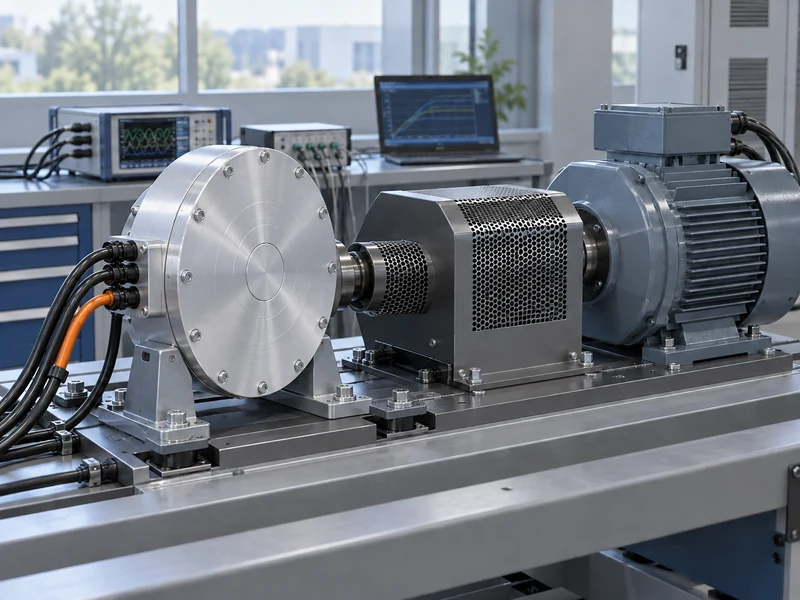
A useful record includes load, speed, electrical input boundary, cooling conditions, initial temperature state, operating duration, and the measured temperature channels. It should state the criterion used to determine that the required duty has been demonstrated. A graph without these conditions can be difficult to interpret even when the temperature trend looks smooth.
The available sensors may not measure every internal component directly. Ask the supplier which temperatures are measured and which limits are assessed by another approved method. This distinction matters when the external housing appears moderate while a different internal location governs the rating.
NIST’s metrological traceability guidance provides a useful basis for requesting identifiable measurement results and their calibration chain. For the motor test, also ask how sensor location and method affect interpretation. Traceable instruments support evidence, but they do not by themselves establish that the chosen test represents the required duty.
How Can Cooling Conditions Change the Conclusion?
The continuous-duty conclusion applies to the heat-removal conditions used in the assessment. For liquid cooling, relevant conditions can include inlet temperature, flow, and the approved fluid; for air cooling, the surrounding airflow and installation can matter. A site arrangement that differs from the assessed condition requires review.
Leili’s overview of axial flux motor cooling methods explains why the cooling arrangement is part of motor integration. Add the plant’s available inlet temperature and flow, or its relevant air-cooling conditions, to the enquiry so the supplier can assess the proposed installation directly. Do not use an unspecified laboratory cooling condition as a promise for a restricted machine enclosure.
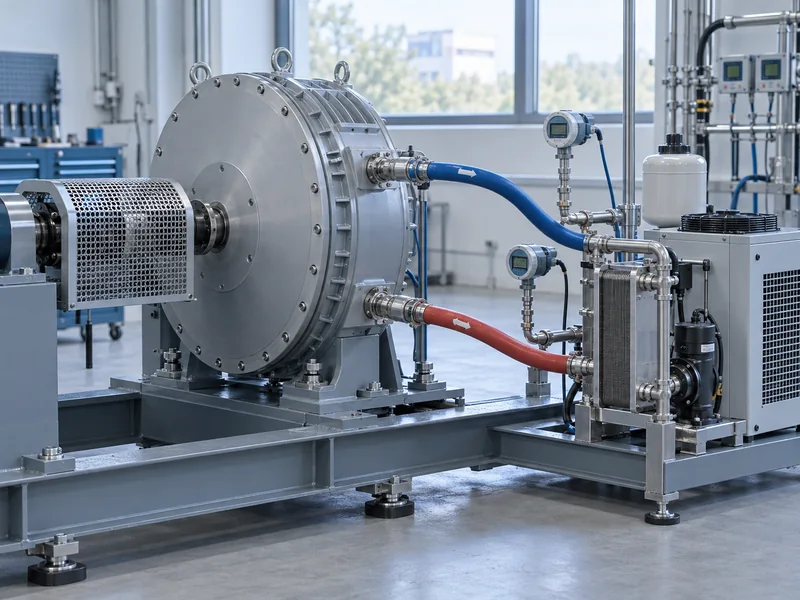
Cooling capacity also needs to remain available during the required operating schedule. A circuit shared with other equipment may experience a different inlet condition when the entire machine is working. Include that simultaneous operating case in the system review rather than assessing the motor cooling branch in isolation.
Why Does the Sequence of Operating States Matter?
The thermal state at the beginning of a demand influences the remaining margin. A temporary load following a long high-output run is not equivalent to the same event from a cold start. Provide the sequence and recovery intervals when the application includes repeated changes.
An average load can conceal a demanding cluster of events. Preserve the timeline when asking the supplier to assess continuous production with intermittent overloads. The resulting approval should identify any restrictions on repetition, initial state, or cooling availability.
Different motor structures can influence the thermal design, but general topology comparisons cannot replace this assessment. Leili’s article on single-rotor and dual-rotor axial flux motors provides background for understanding alternatives. Use the actual construction and validated limits for the selected product.
What Should Be Compared Between Supplier Proposals?
Compare torque at the required speed under equivalent cooling and duty conditions. Then compare the supporting evidence, restrictions, and equipment required to maintain those conditions. A motor that needs a more demanding cooling installation may shift cost or complexity into another part of the machine.
Manufacturing consistency and documented configuration also matter when evidence comes from a representative test. Leili’s explanation of the axial flux motor manufacturing process provides related background. Ask which features of the tested configuration are controlled in the supplied product and what changes would require reassessment.
Do not create a universal derating percentage to fill missing information. If the supplier has not confirmed the required duty, record an open technical item. A conservative-looking assumption can still be inappropriate when the governing thermal mechanism is unknown.
How Can a Buyer Separate a Demonstration from Duty Evidence?
A demonstration may show that a motor reaches the requested torque for a short period, while the purchase requirement concerns repeated shifts under defined cooling conditions. Ask what question the demonstration was designed to answer. Its result can be valuable without proving the broader continuous-duty requirement.
For a hypothetical production line, suppose the important condition is a long run followed immediately by a brief increase in torque. A test that begins from a cool motor and includes only the brief increase does not reproduce that sequence. The supplier could propose a representative duty test or another justified assessment, but the gap should be resolved explicitly.
Keep the demonstration record and the final duty confirmation as separate documents if their scopes differ. This avoids dismissing useful development evidence while preventing it from acquiring a stronger meaning during procurement. The buyer can then identify exactly which operating condition has been established and which still requires confirmation.
How Should Continuous Duty Be Accepted at the Machine?
Agree a site verification plan that checks the operating condition and the cooling services against the approved basis. Record relevant temperatures and behavior over the required duty according to the supplier’s procedure. The plan should establish what constitutes an acceptable result and how exceptions will be handled.
Retain the confirmed rating conditions in the asset documentation. Future changes to enclosure, coolant supply, speed range, or production pattern can alter the original basis. A clearly documented continuous-torque requirement allows the engineering team to review those changes before they become operating problems.
The strongest purchasing comparison is therefore not the largest isolated torque number. It is a supported operating envelope that matches the machine’s sustained work and identifies the conditions needed to deliver it. That evidence turns an axial flux motor rating into a requirement the complete installation can meet.