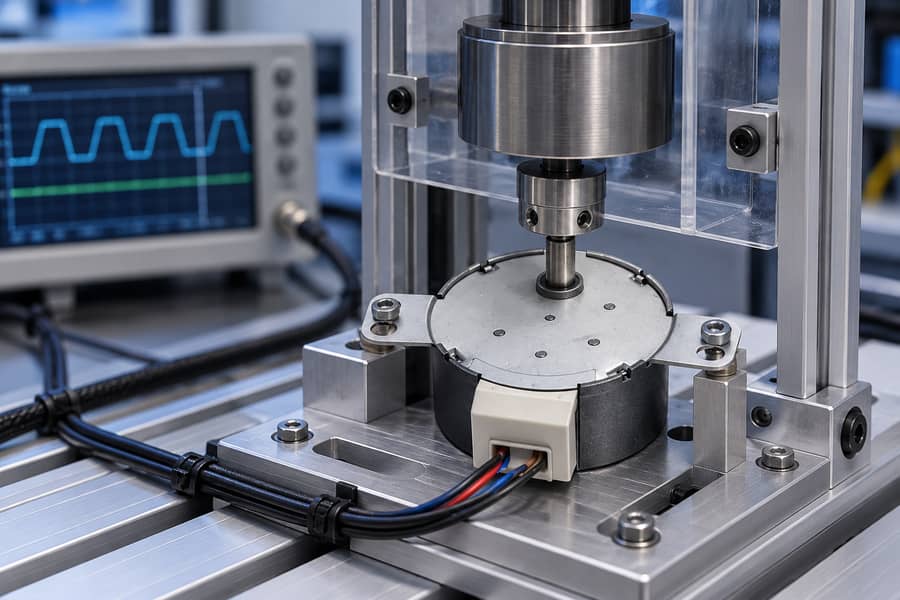
How to Build a Gear Wear Test for a Repetitive Stepper Mechanism
Build a representative gear wear test with defined motion cycles, baseline lost-motion measurements, planned inspections, and clear functional acceptance criteria.

Build a representative gear wear test with defined motion cycles, baseline lost-motion measurements, planned inspections, and clear functional acceptance criteria.
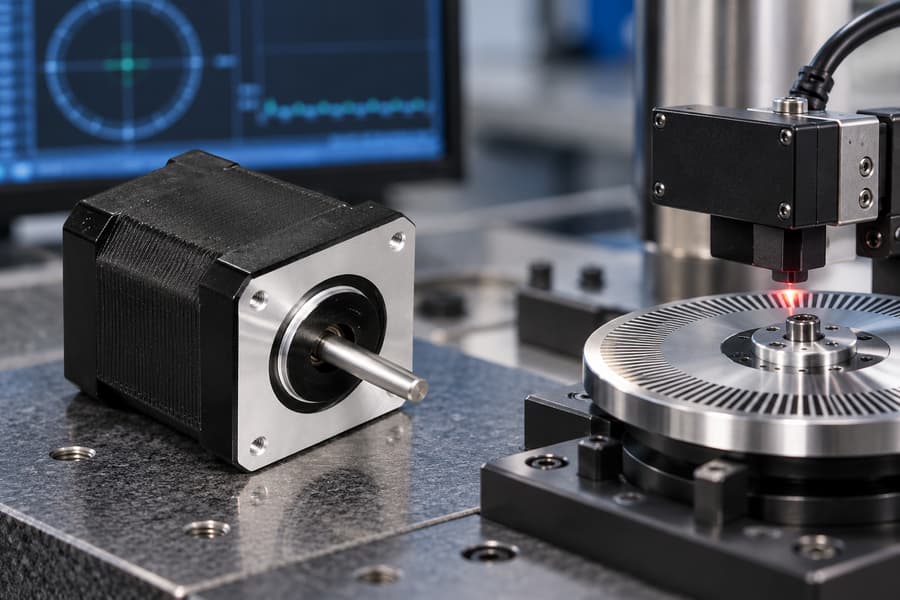
Compare native step angle, microstep resolution and measured machine accuracy. Review transmission errors, driver limits, thermal effects and load-side validation before choosing a hybrid stepper.
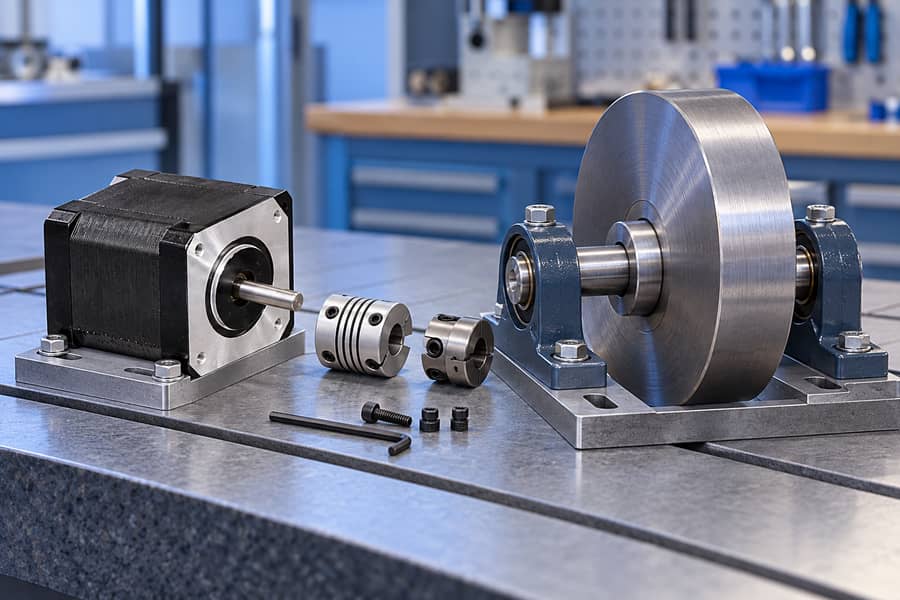
Match a hybrid stepper to a high-inertia load using motor-referred inertia, dynamic torque, driver settings and motion tests. Review gearing, thermal duty, settling and power-loss holding separately.
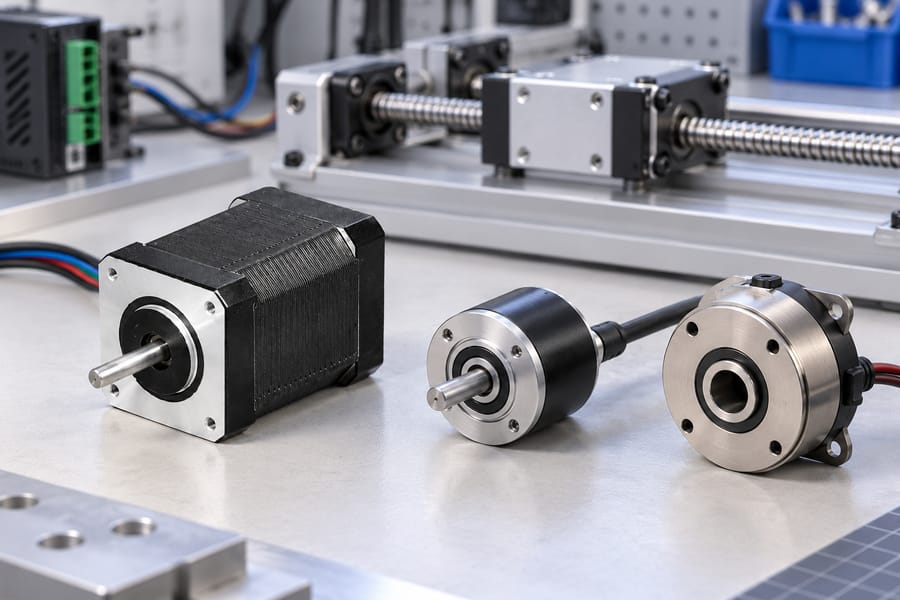
Learn when a stepper axis needs encoder feedback, a holding brake, or both. Compare load behavior, power-loss response, measurement location, accessory compatibility, and practical acceptance tests before choosing a configuration.
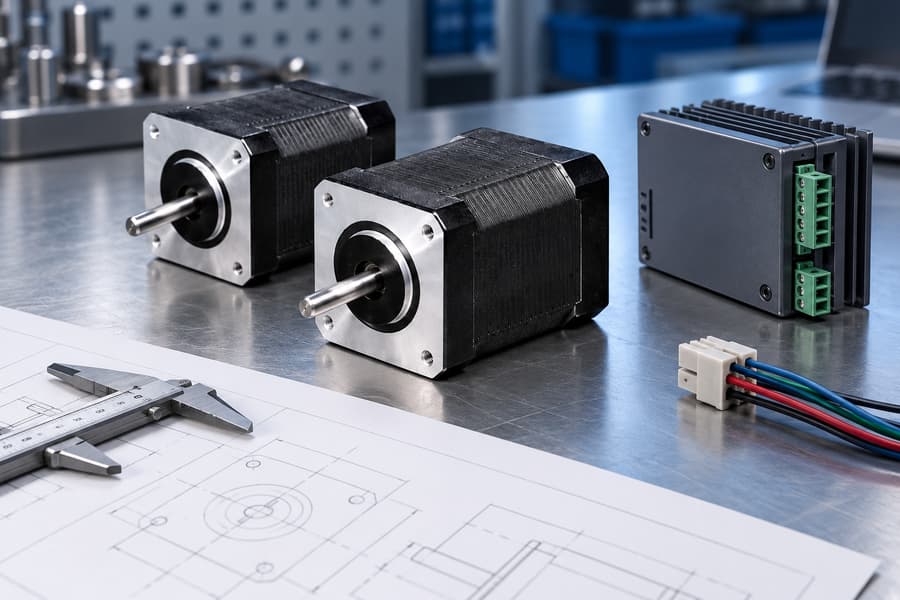
Check driver and winding compatibility, torque-speed data, pulse scaling, mechanical fit, inertia, and thermal performance before replacing a two-phase stepper with a three-phase design. Define machine-level acceptance tests and a documented rollback plan.
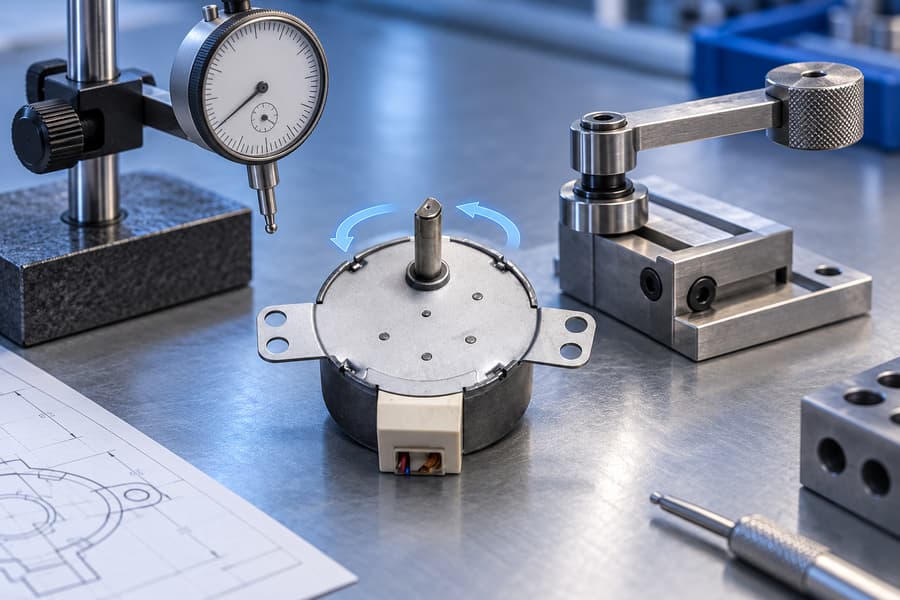
Specify geared stepper backlash using a defined output-angle measurement, reversal torque, temperature, and service-life condition. Separate clearance from compliance, calculate linear lost travel, and agree on static and dynamic acceptance tests.
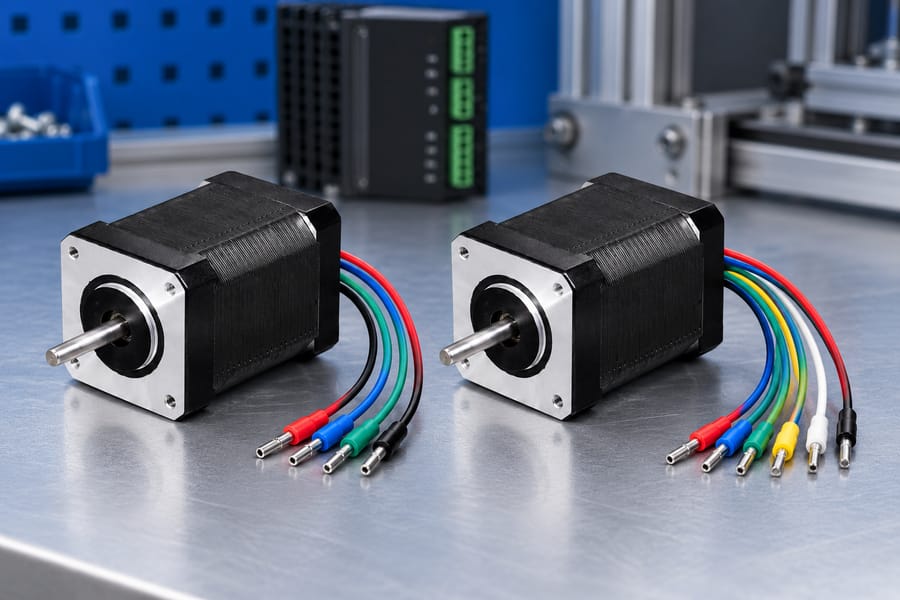
Compare four-wire and six-wire stepper connections, bipolar and unipolar driver requirements, and full-winding versus half-winding operation. Learn how to identify leads, isolate unused terminals, set approved current limits, and verify the installed wiring.